



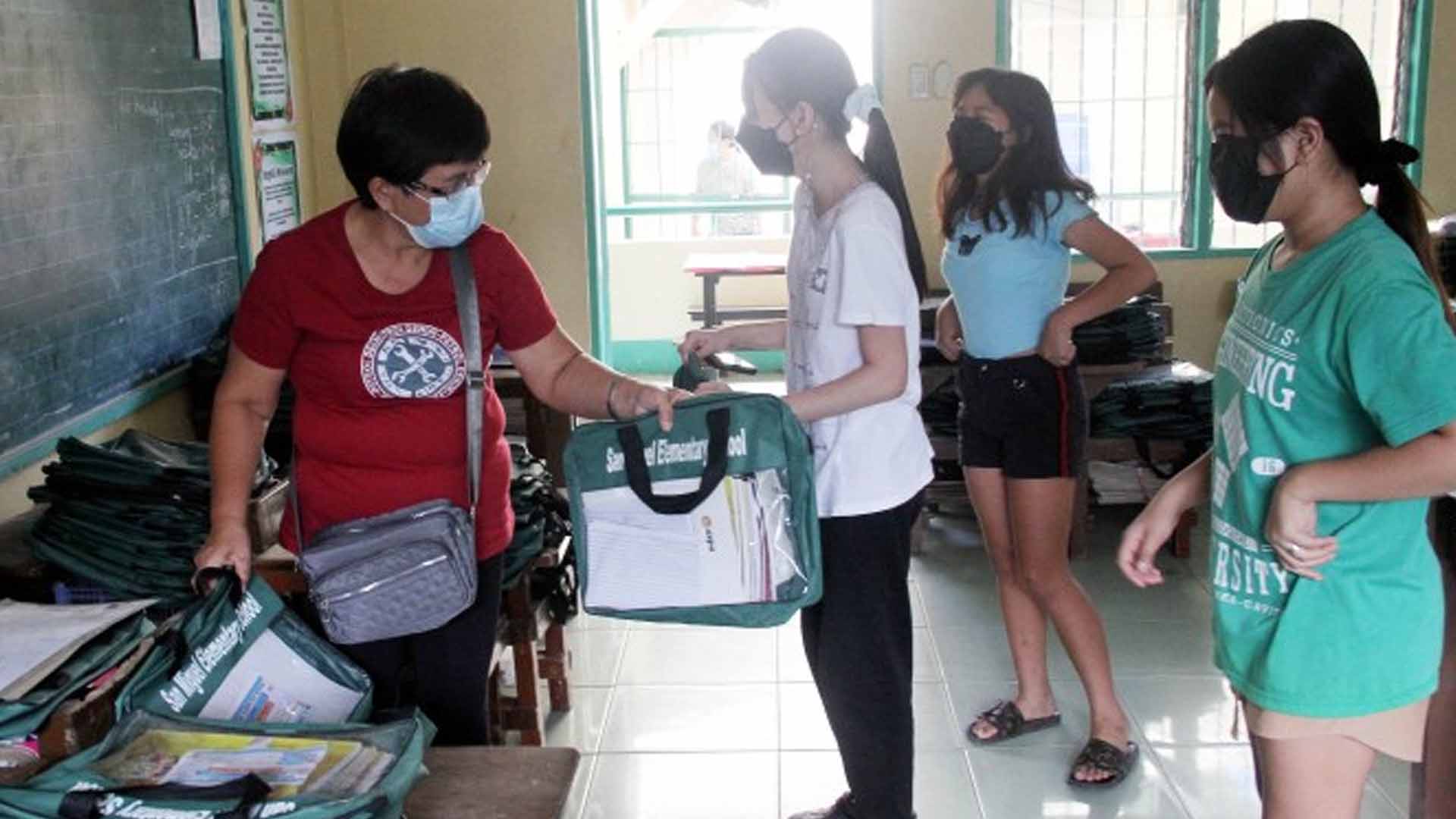






The Department of Education (DepEd) presented in a meeting on Tuesday to President Ferdinand R. Marcos Jr. its proposal to make blended learning a permanent mode of learning delivery in the country.
DepEd spokesperson Michael Poa said during a press briefing in Malacañang that blended learning is one of the solutions that the agency has seen to address classroom and teacher shortages.
“Hindi po kasi mabilis o hindi nagagawa iyan (It’s not that swift or it can’t be done) overnight – that’s why these problems are still with us today,” Poa admitted.
“That’s why we also presented that we are now going on a two-track approach wherein alongside the traditional solutions of building more classrooms and hiring more teachers, we also want to tap into technology,” he added.
However, Poa said that this idea needs further study to make sure about its efficiency and effectivity.
“Ayaw naman nating basta-basta mag-blended learning tayo (We don’t want to immediately implement blended learning) and then (the) quality of education suffers. That’s why before we roll that out, we really want to ensure looking at best practices even in the private sector, kung papaano nai-implement iyong blended learning para po masigurado natin (on how blended learning is being implemented for us to make sure) that once we implement it, we will not affect the quality of education,” he explained.
To improve the teaching quality in the country, Poa said DepEd is also working with the Commission on Higher Education (CHED) through the Teachers Education Council (TEC).
Under Republic Act 11713 or the Excellence in Teacher Education Act signed into law last year, the TEC is mandated to set basic requirements for teacher education programs and ensure the coherence of teacher education and training from pre-service to in-service.
The law, which was also highlighted in the Marcos administration’s Philippine Development Plan 2023-2028, revamps the TEC by strengthening the coordination among the DepEd, CHED and the Professional Regulation Commission. (PNA)


