



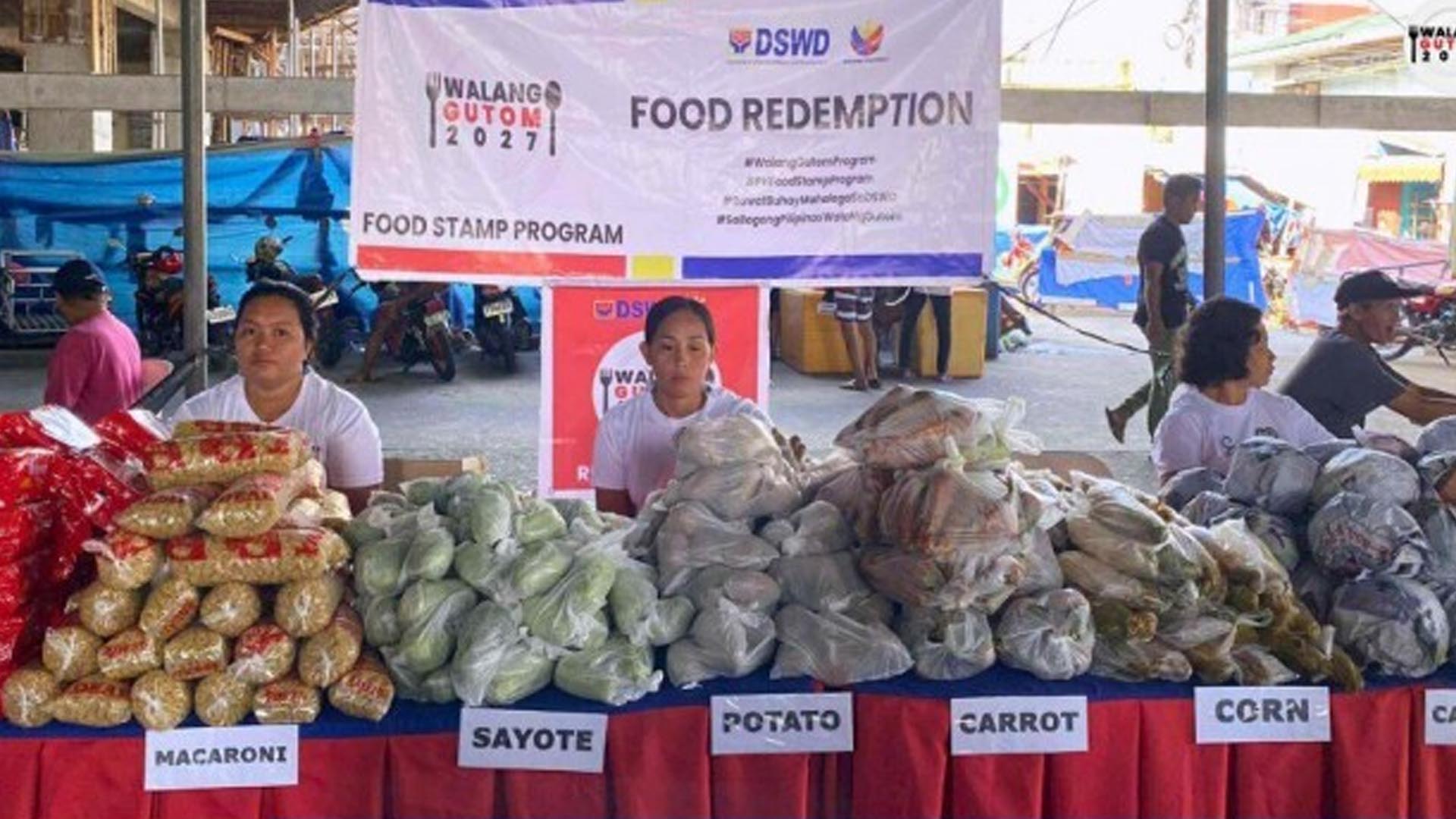






The Department of Social Welfare and Development (DSWD) on Thursday welcomed the recent survey by the Department of Science and Technology – Food and Nutrition Research Institute (DOST-FNRI) showing a decrease in the national food insecurity rate, attributing the positive result to the Marcos administration’s sustained anti-hunger initiatives.
Based on the 2025 survey presented by the DOST-FNRI during the 2026 National Nutrition Summit on Wednesday, the national estimate of moderate-to-severe food insecurity declined from 33.3 percent in 2023 to 32.6 percent in 2025.
The same study also showed that three out of 10 Filipinos still experience moderate to severe food insecurity.
“We, in the Department, recognize the results of the study as it affirms our work and efforts to ensure no Filipino is hungry, and we are also glad that the number is decreasing. The study is a welcome development,” DSWD spokesperson Assistant Secretary Irene Dumlao said in a statement.
“Kaya hindi po kami titigil sa pagpapaigting ng aming mga anti-hunger interventions hanggang sa mawala na ang bilang ng mga pamilyang Pilipino na nakakaranas ng kagutuman dahil ang tao ay magiging produktibo kung nakakakain nang tama at masustansya (We will not stop strengthening our anti-hunger interventions until the number of Filipino families experiencing hunger has been greatly reduced),” she added.
The DSWD’s Walang Gutom Program (WGP) is the Philippine government’s flagship anti-hunger program based on President Ferdinand R. Marcos Jr.’s directive to combat food insecurity and reduce involuntary hunger among Filipino families.
Under the WGP, food-poor families are provided with electronic benefit transfer cards loaded with PHP3,000 in monthly food credits, ensuring they have access to sufficient and healthy meals from DSWD-accredited stores.
Beyond addressing hunger, the WGP is also designed to promote healthy eating habits to better support the nutritional needs of Filipino families, including children, aligning with the Marcos administration’s priorities to invest in human capital development.
The DSWD also implements other food security and zero-hunger programs such as the Walang Gutom Kitchen, Supplementary Feeding Program, Enhanced Partnership Against Hunger and Poverty and the Project Local Adaptation to Water Access and Breaking Insufficiency through Nutritious Harvest for the Impoverished.
“Because addressing hunger and improving nutrition require a wide range of interventions, we are ensuring that our food security programs are both nutrition-specific and sustainable to create a long-term impact on the lives of our beneficiaries,” Dumlao said.
Addressing food security and anti-hunger interventions are also part of the measures that the DSWD is championing in line with its chairship of the 2026 Association of Southeast Asian Nations Socio-Cultural Community.
“The DSWD is continuously integrating comprehensive solutions into the programs of the Department and working closely with other agencies in making more long-term solutions to finally eliminate hunger in the country,” Dumlao said.
These efforts align with President Marcos’ directive to implement a whole-of-government approach in ensuring that no Filipino family goes hungry by 2028. (PNA)


