



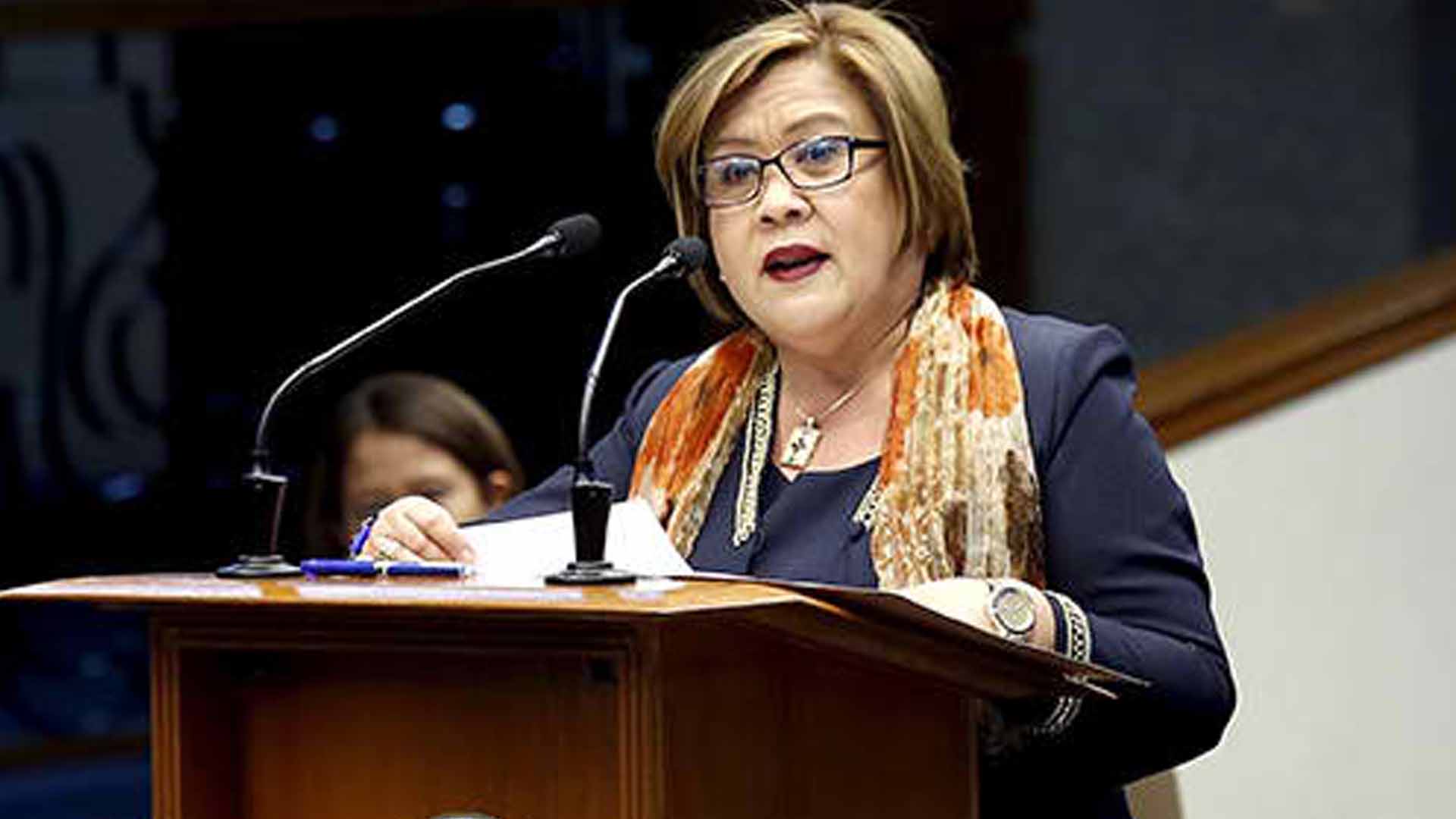






Opposition Senator Leila M. de Lima has joined the calls for more aggressive efforts to ensure that children continue their learning through all possible ways amid the educational challenges brought about by the COVID-19 pandemic.
In her message for the Salinlahi Alliance for Children’s Concern event today (April 11), De Lima said it takes a unified and sustained effort from all the education stakeholders involved to ensure that the children will grow to be effective members of society despite the challenges of the pandemic.
“We must realize that the pandemic has affected different areas in the Philippines differently. Some areas have maintained a low to zero infection rate for months already. The internet and technology access is also uneven with teachers and children in less urban communities struggling to send emails, much less stream lessons online,” she said.
“These disparate situations call for a more nuanced approach to education with programs being tailor-fit to the opportunities available and requirements needed in the various communities,” she added.
De Lima stressed, however, that the crisis surrounding the education of Filipino children was evident even before the pandemic, citing the country’s 2018 ranking in the Programme for International Student Assessment (PISA).
According to PISA, the Philippines ranked last in 79 countries in reading comprehension among 15-year-old students and ranked second last in both mathematics and science.
As such, De Lima said it is important to realize that children are just as, if not more, affected than adults amid the pandemic and that it is “ought to be acknowledged in order to properly and fully respond to their needs.”
“Some experts are calling today’s children the ‘Pandemic Generation.’ As the prevailing discourse and focus surrounding COVID-19 pandemic has primarily centered on its impact on adults, even less attention and regard is being given to children’s mental health and overall well-being amid the pandemic,” she said.
“Sadly, even the initial debates about school reopening are often framed around adults and the threat of transmission among carrier asymptomatic children instead of their emerging needs as affected learners in the face of this pandemic,” she added.
Stressing that children also suffer the adverse effect of the pandemic, De Lima asked: “When the country was placed under lockdown, weren’t they also forced to stay in their homes for extended periods, away from friends and classmates?”
She added, “When we were told to practice physical or social distancing, weren’t they also taught to keep distance from their families and other relatives? Weren’t they also deprived of the critical structure of having to prepare and go to school everyday?”
De Lima, who chairs the Senate Committee on Social Justice, Welfare and Rural Development, filed Senate Bill No. 1872 in October 2020 proposing to exempt educational applications, gadgets, computers and e-books from value-added tax (VAT) for the principal use of teachers and students in online and distant learning.


