



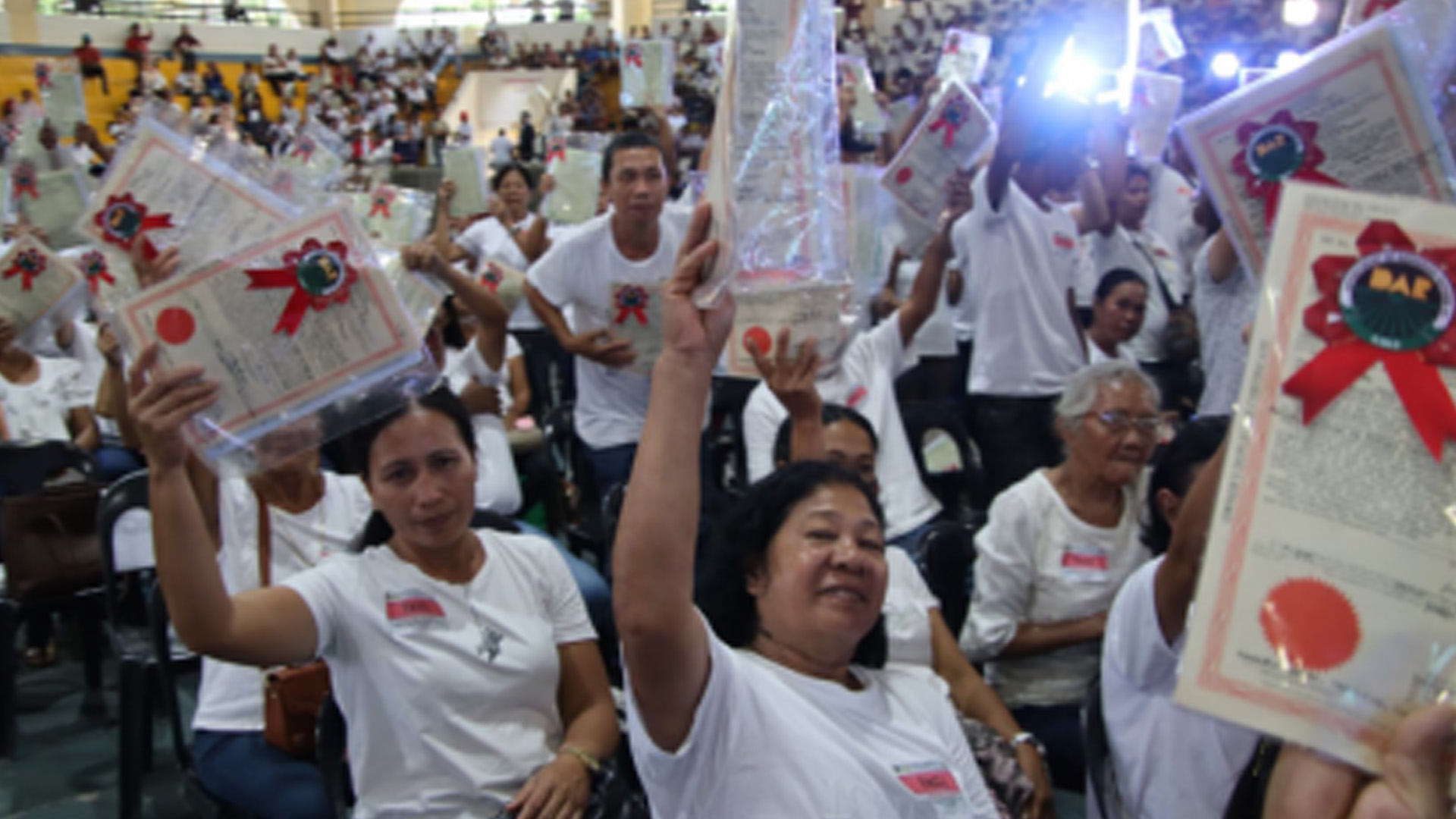







The Department of Agrarian Reform (DAR) is looking to revive its scholarship program for the children of Agrarian Reform Beneficiaries (ARBs) to mold them into active partners in rural development and ensure that agrarian reform lands remain productive and sustainably managed in the long term.
Agrarian Reform Secretary Conrado Estrella III on Monday said the agency is exploring ways to generate and mobilize funds to provide free education for the children of deserving ARBs.
“Sooner or later, the farm lots awarded to their parents will be passed on to them. We must prepare them through quality education and exposure to modern farming technologies,” he said as quoted in a news release.
“Education is a powerful catalyst for empowering the youth to pursue their aspirations and contribute meaningfully to countryside development,” he added.
While encouraging ARBs’ children to pursue career paths of their choice, Estrella stressed that they must remain committed to developing, caring, and maximizing their family farm lots awarded to them under the Comprehensive Agrarian Reform Program (CARP).
Estrella cited the country’s aging farmer population as a pressing concern, as it poses serious challenges to the future of Philippine agriculture.
He said studies show that the average age of Filipino farmers is now 57, which means a possible shortage of farmers in the next decade, which may threaten the country’s long-term food security.
He noted that reviving the scholarship program, which was one of DAR’s previous flagship initiatives that focused on agriculture-related courses, is a strategic step to attract a new generation of agri-leaders and safeguard the gains of agrarian reform.
Meanwhile, Estrella also warned against selling the land, emphasizing that maintaining the productivity of agrarian reform areas is vital to rural livelihoods and national food security.
“You may become doctors, nurses, engineers, accountants, or professionals in other fields, but always take time to care for the farm lots awarded to your parents. Develop them, make them productive, and never consider selling them,” he said. (PNA)


