



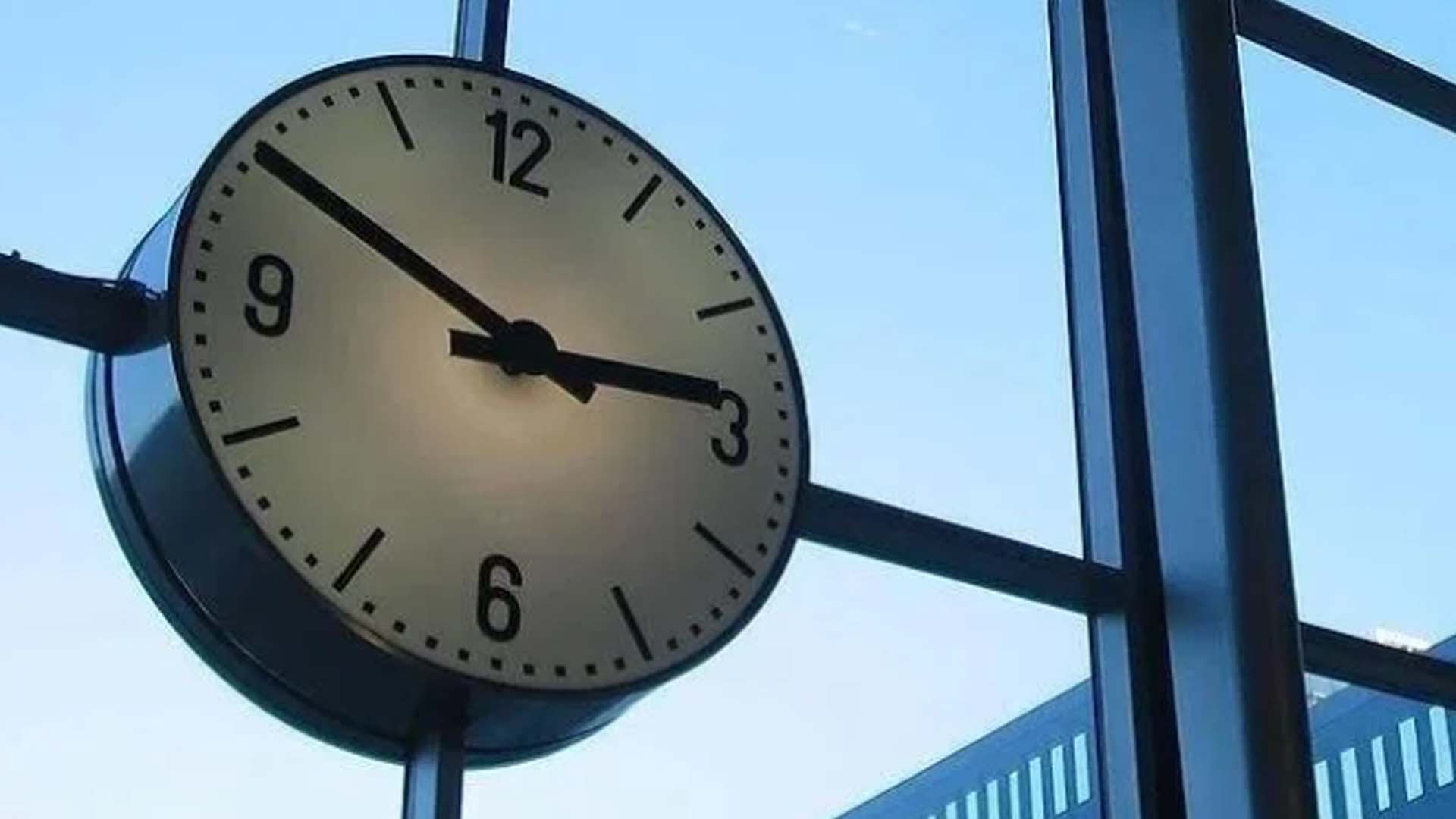







A recent study suggests that clocks may skip a second in the near future because the Earth is undergoing changes in its rotation due to factors such as climate change and geological shifts.
According to the study published in the Nature journal, there might be a necessity for clocks to skip a second, referred to as a “negative leap second,” around the year 2029.
The study warns that such changes in Earth’s rotation may necessitate adjustments in Coordinated Universal Time (UTC), a standard used to set all time zones around the world, earlier than originally planned.
The implications of this adjustment extend beyond timekeeping, as it could pose an “unprecedented problem for computer network timing.”
The Earth’s rotation, typically 24 hours, is now fluctuating, prompting adjustments in leap seconds to align atomic and astronomical time.
Between 1972 and 2016, 27 leap seconds were added to compensate for the Earth’s slowing rotation. But the rate of slowing was tapering off to the point that the Earth’s rotation was actually speeding up.
However, recent observations suggest that this is being offset due to the rapid melting of ice at the poles since 1990. Melting ice shifts Earth’s mass from the poles to the bulging center, which slows the rotation.
In response, timekeepers are planning revisions to leap second standards in the 2030s to minimize frequent adjustments and maintain synchronization across various timekeeping systems.
Geological and climatic factors including oceanic tides and melting polar ice affect Earth’s rotation, delaying the need for leap second adjustments.
The accelerated melting of polar ice, a consequence of human-induced climate change, is redistributing Earth’s mass and slowing its rotation.
“If polar ice melting had not recently accelerated, this problem would occur 3 years earlier,” the study noted.
This phenomenon is “already affecting global timekeeping,” indicating the tangible impact of climate change on Earth’s rotational dynamics.
Despite a natural rotation increase, melting ice has delayed the need for a leap-second adjustment from 2026 to around 2029.
This delay in the need for leap second adjustments underscores the complex relationship between environmental changes and Earth’s timekeeping systems.
Timekeepers aim to phase out leap second adjustments by 2035 to adapt to Earth’s changing dynamics and maintain precision in timekeeping amid natural and human-induced changes. (PNA)


