



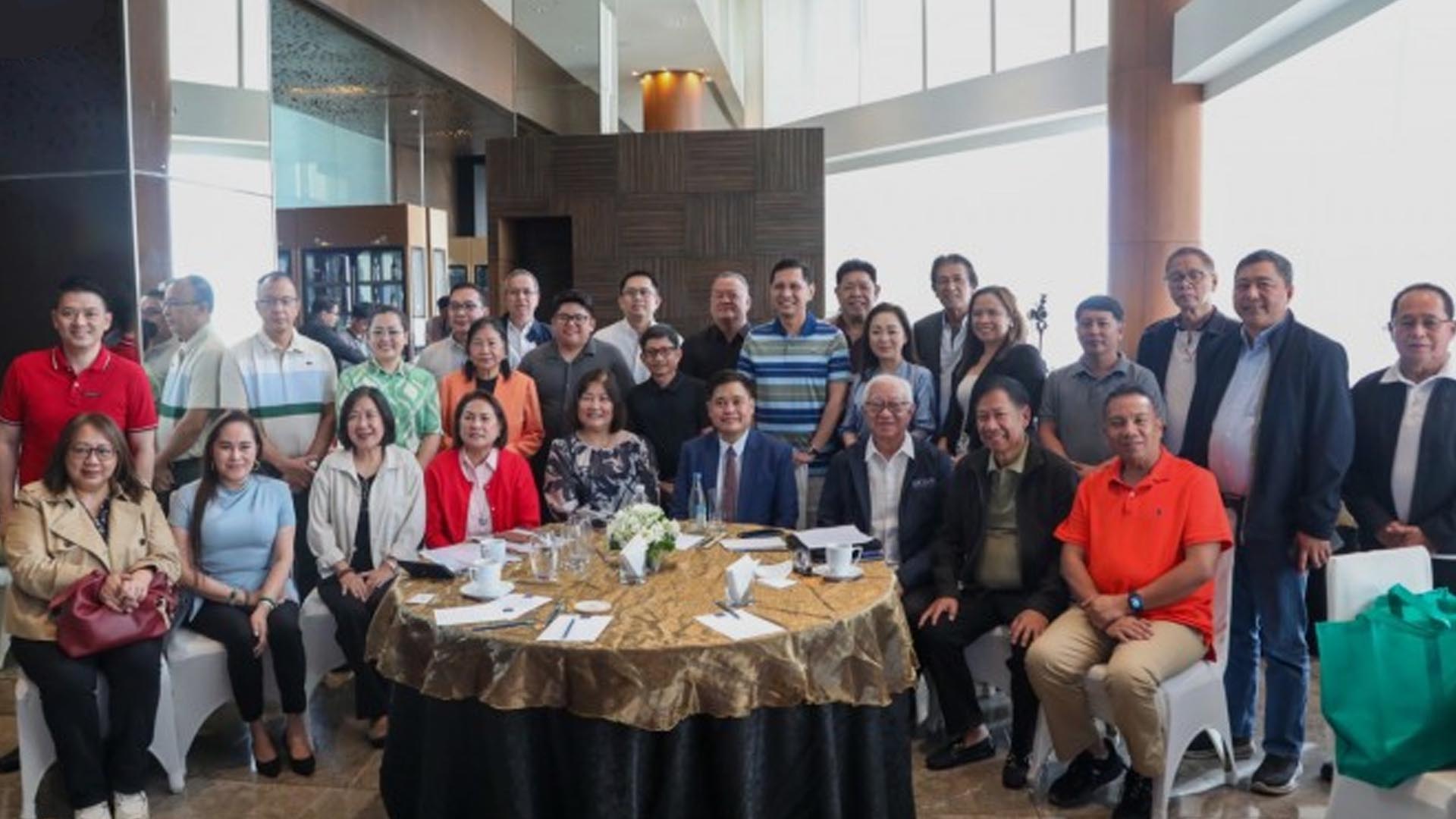






The Climate Change Commission (CCC) highlighted the critical role of vice governors in strengthening risk governance and building climate-resilient communities during the 103rd Year-End National Assembly of the League of Vice Governors of the Philippines (LVGP) on Dec. 4-6.
Vice Chairperson and Executive Director Robert E.A. Borje said vice governors occupy “the critical intersection where plans meet priorities, where evidence meets action, and where strategy becomes alignment across the entire province.”
He said this strategic position enables vice governors to lead efforts that protect lives, sustain livelihoods, and secure the future of their provinces.
Borje linked this leadership role to national policy frameworks, particularly the National Adaptation Plan (NAP), which guides communities in identifying locally appropriate adaptation practices and projects based on specific vulnerabilities.
The NAP, developed under the leadership of President Ferdinand R. Marcos Jr., reflects the administration’s vision and plan of action for a climate-smart and climate-resilient Philippines.
“These insights allow vice governors to understand —not vaguely, but precisely— what hazards your provinces face and how those hazards intersect with population, livelihoods, and infrastructure,” he said.
He said Local Climate Change Action Plans (LCCAPs) must be anchored in the NAP to ensure provincial strategies are science-driven, evidence-based, and aligned with national priorities. Such alignment strengthens risk governance by making adaptation actions responsive, measurable, and sustainable.
Borje also highlighted the People’s Survival Fund (PSF) as a key financing mechanism for local adaptation initiatives.
From 2023 to 2025, the PSF Board significantly accelerated the approval of projects and Project Development Grants, resulting in a sharp increase in fund utilization from just over 30 percent to near full commitment.
By May 2024, the initial PHP1-billion allocation had been fully committed and exceeded by PHP321.6 million.
To sustain this expanded pipeline, an additional PHP1 billion was appropriated under the 2025 GAA, bringing the portfolio to 15 projects and nine PDGs with a total value of approximately PHP1.4 billion.
“These developments make the PSF a more accessible and reliable financing option, helping local governments secure funds to strengthen climate resilience in their communities,” he said.
However, Borje acknowledged that there continues to be room for growth and development in the PSF application process.
He underscored the CCC’s commitment to sustain joint efforts with the PSF Board Chair and Secretariat Department of Finance and PSF Board members to explore ways of further improving and strengthening application and implementation support mechanisms for LGUs.
While urging vice governors to continue championing resilience and good governance, Borje also underscored the importance of a whole-of-government and whole-of-society approaches to help ensure that government processes and systems remain responsive to the needs of local communitieso and lead to more robust, sustainable development and climate resilience.
The LVGP, a national organization composed of Vice Governors from across the country, provides a platform for members to share experiences, discuss common challenges, coordinate policies, and exchange best practices to strengthen governance at the provincial level. (PNA)


