



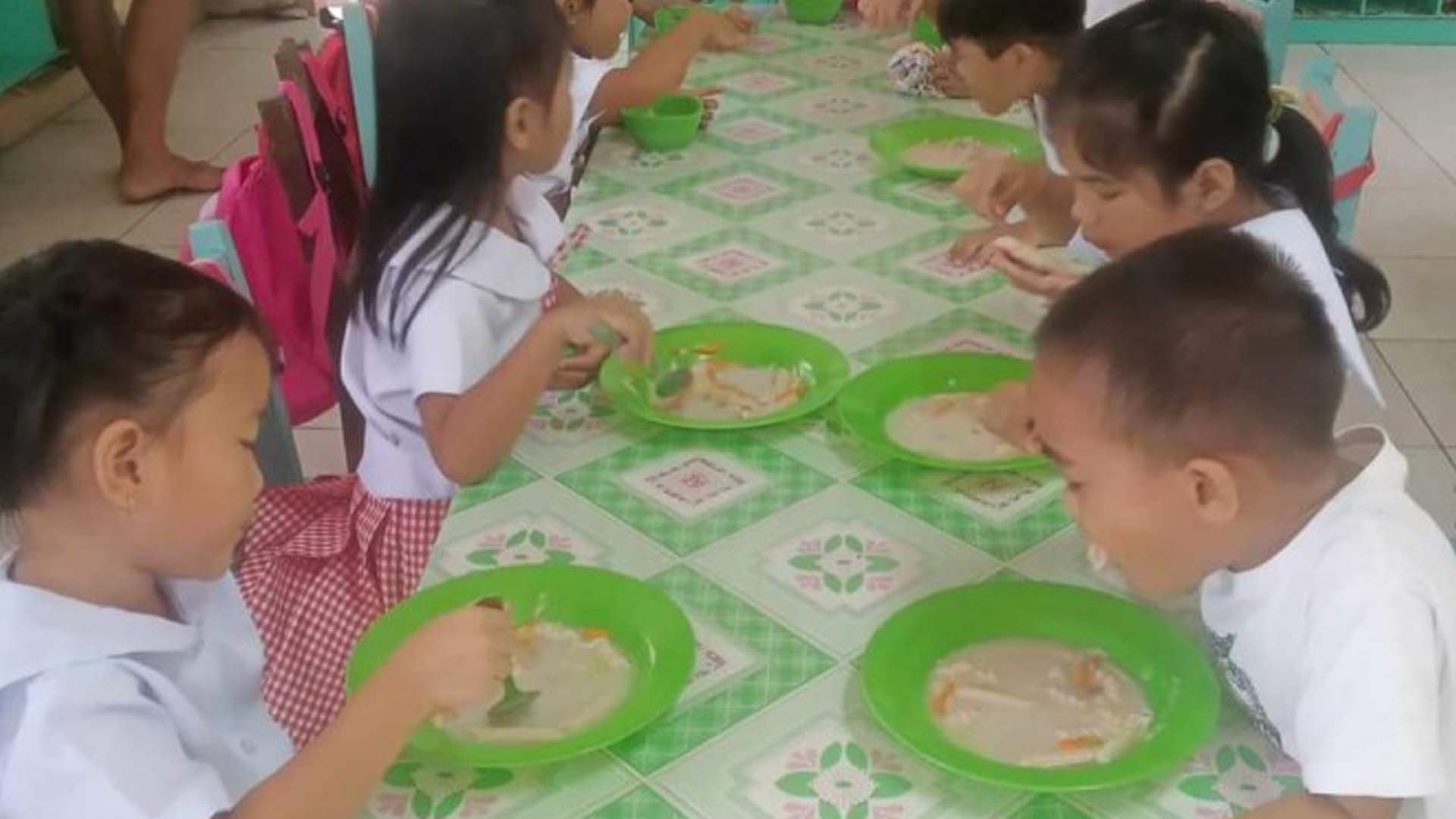






The Department of Social Welfare and Development (DSWD) on Wednesday said the increased budget allocation for the Supplementary Feeding Program (SFP) enables the agency to support wider geographic coverage, reach more children nationwide, and expand the feeding period this year.
From PHP5 billion in 2025, the budget allocation for the SFP was raised to PHP9.26 billion for 2026, and the feeding period was extended from 120 days to 180 days.
DSWD spokesperson Assistant Secretary Irene Dumlao said the expansion of the SFP reflects the department’s strengthened commitment to improving the nutritional status of children aged two to five years old enrolled in Child Development Centers (CDCs) and Supervised Neighborhood Playgroups (SNPs), in line with the Philippine Plan of Action for Nutrition (PPAN) and the Philippine Development Plan (PDP) 2023–2028.
“The expansion of the Supplementary Feeding Program, particularly the extension to 180 feeding days and the inclusion of more municipalities and child development centers, required a corresponding increase in budget to ensure that services remain adequate, timely, and responsive to the needs of undernourished children,” Dumlao said in a news release.
From 2025 to 2026, program coverage increased from 1,583,316 children to 1,899,415, covering 735 to 864 municipalities, with the number of covered CDCs rising from 29,094 to 32,230 in priority PPAN areas.
In provinces with high poverty incidence, the number of covered CDCs also increased from 5,284 in 2025 to 7,824 in 2026.
“The expansion ensures that more undernourished children in geographically and economically vulnerable communities receive regular and additional nutritional support,” Dumlao said
Program performance in recent years has shown consistently high accomplishment rates.
In 2024, the SFP served 99.17 percent of the annual target whereas, in 2025, the program exceeded the annual target by reaching 100.25 percent accomplishment.
Milk feeding efforts also reached more than 100,000 children annually, underscoring the importance of continued investment and expansion.
Dumlao said the DSWD continues to strengthen partnerships with local government units to ensure the orderly implementation of the SFP.
“The DSWD is also strengthening Supervised Neighborhood Playgroups to reach out to children not enrolled in Child Development Centers especially those who are undernourished; as well as the capacity of child development workers and parents to support proper feeding and growth monitoring,” she said.
Capacity building is achieved through the conduct of Parent Effectiveness Sessions and promoting greater community participation, including support for local farmers and producers as sources of food commodities, she added.
“With the expansion of the program, the SFP is expected to further contribute to improved child nutrition outcomes and support national efforts to combat hunger and undernutrition among Filipino children,” Dumlao said. (PNA)


