










As the province intensifies its tourism industry, local government units and private stakeholders are working side-by-side to enhance visitor experience and boost community livelihoods by promoting Benguet’s natural beauty, agriculture and culture.
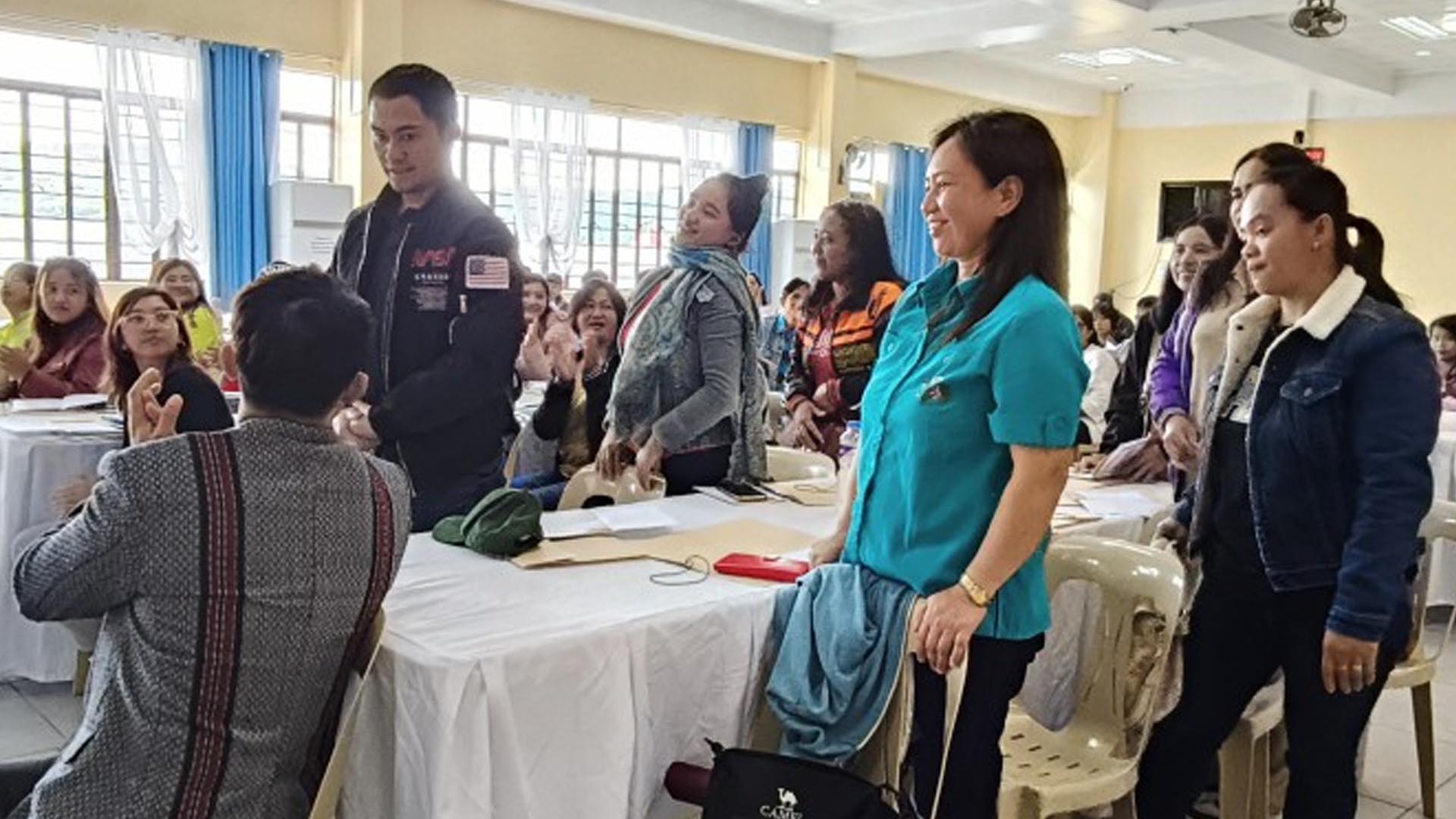
Lany Ganayan, owner of Northern Blossom flower farm in Atok town and vice chairperson of the Benguet Provincial Tourism Council, said the private sector is taking the lead in developing sites and services while calling on government support for capacity building.
“The private sector should give its best service because we are representatives of Benguet,” Ganayan said during a recent training session.
“We need to benchmark, experience how it feels to be toured, and apply what we learn to improve our own practices,” he said.
Ganayan noted that Atok residents initially resisted tourism due to its complications but later embraced it upon seeing the economic benefits.
The influx of visitors at Northern Blossom spurred the opening of restaurants, coffee shops, souvenir stores, transient houses and other small businesses.
Community tour guides, many of them students working part-time, were trained not only in communication skills but also in photography and videography to better assist guests.
From 11 homestays during the pandemic, Atok now has more than 33.
Tourist attractions have expanded from just three sites to 11, including the Northern Blossom, Highest Point, Mount Timbac, Hidden Garden, Sakura Park at Haight’s Place, Lourdes Grotto, Atok Adventures and Spanish Trail.
Tourist arrivals in Atok now range from 300 to 500 daily during the low season, peaking at 2,000 to 3,000 during holidays and long weekends.
Atok’s popularity, recognized by the Tourism Association of the Philippines, now rivals Itogon’s peaks and other hiking destinations.
Ganayan stressed that while the private sector must not overly depend on government, it expects support in terms of access roads and training.
Northern Blossom alone employs about 40 regular workers and 60 part-time guides.
Governor Melchor Diclas acknowledged the boom in Atok’s tourism, saying that limited accommodations have prompted new ventures like outdoor camping.
“We can say that Atok is really booming in terms of tourism,” he said in an interview.
Vice Governor Mary Rose Kepes added that the growth of micro, small and medium enterprises (MSMEs) complements tourism.
She said the province has at least 41,237 MSMEs based on the 2024 records. The number includes 7,210 new businesses.
“They support one another because the market of the MSMEs is the tourists, aside from the locals, and the tourism industry also needs the MSMEs to thrive,” she said. (PNA)


