


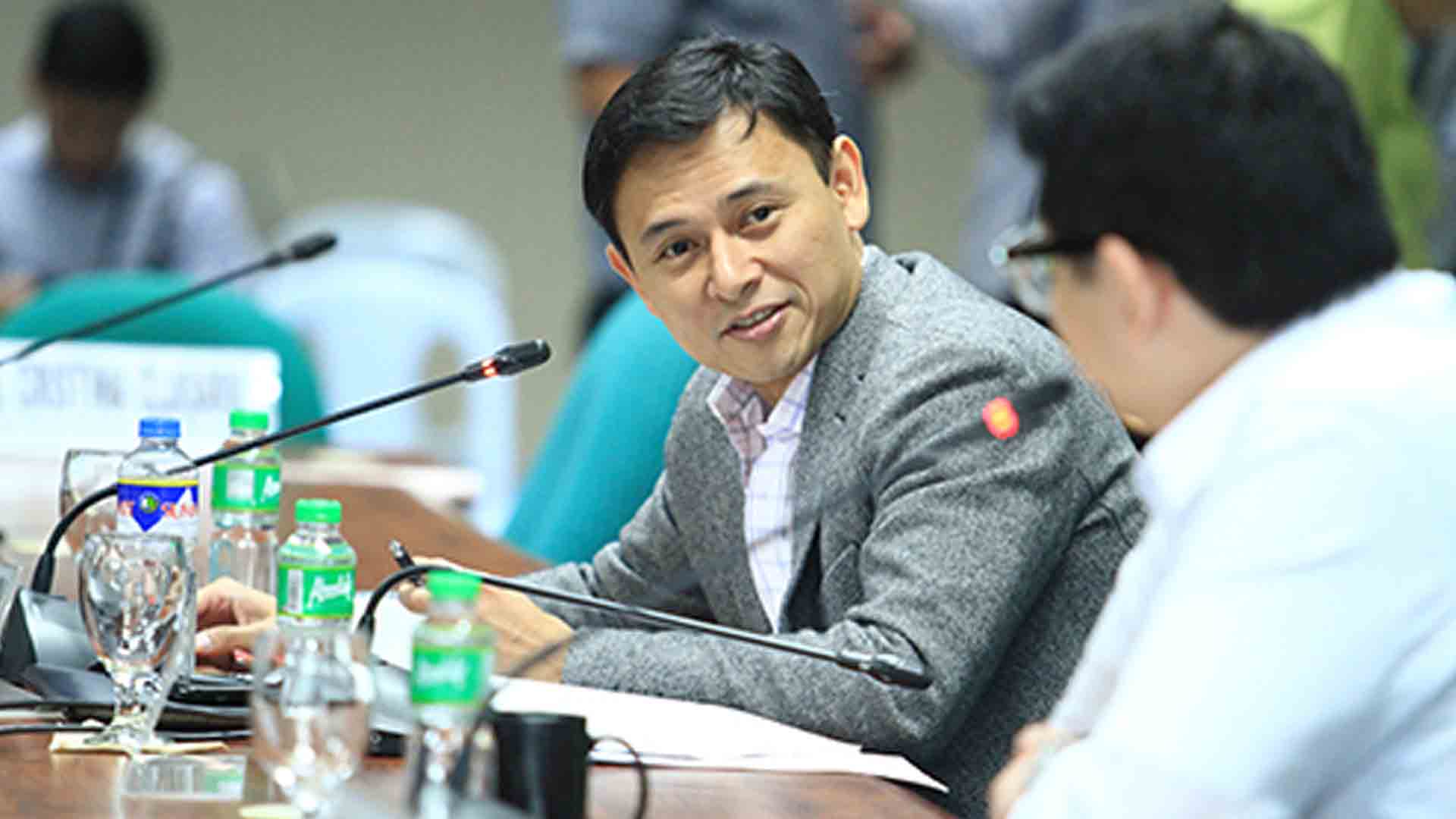






Senator Sonny Angara said the country should begin to experience better internet connectivity even in remote and inaccessible areas once the Department of Information and Communications Technology (DICT) completes the first phase of its National Broadband Program (NBP).
Under the P4.5 trillion General Appropriations Bill that was ratified last Wednesday by Congress, Angara noted that the DICT’s budget for the NBP was doubled from the proposed P902.194 million in the National Expenditure Program to P1.9 billion.
This is on top of the budget for the implementation of the free Wifi in public places and in the state universities and colleges (SUCs) programs of the DICT.
“We need to really ramp up our internet infrastructure. It’s one of the needs of our country. When you talk about build, build, build, you don’t just look at roads, you don’t just look at buildings, but you also look at the actual internet infrastructure because that will provide greater investments,” Angara said.
“With bigger investments coming in to the country, this will mean more higher paying jobs and more economic activity,” Angara added.
There has always been a need for a fast, stable and reliable internet connection in the country but Angara said that this is even more urgent now because of the changing requirements of the people under the new normal.
Face-to-face transactions in government and the private sector, as well as in education has led to a greater demand for internet connectivity.
The cost of internet subscriptions for the government alone is a huge amount but with the implementation of the NBP, the DICT promises to bring down the rates significantly.
DICT claims that government will have access to cheaper and more reliable internet services that will reduce government spending on internet subscription once the first phase of the NBP is completed.
The agency noted that government offices spend an average of P350 per Megabits per second (Mbps) of internet bandwidth a month.
For an average size agency which requires a 100 Mbps shared internet connectivity across a whole building, the cost would be P35,000 per month, or P420,000 a year.
With the NBP, the DICT said the cost for the same agency would go down to P5,000 a month, or P60,000.
The DICT expects the government to save P720 million in internet subscription expenses in the first year of implementation of the NBP.
For the free Wifi in public places, the budget of the DICT for this purpose was increased by P250 million, bringing up the total to P2.667 billion.
As for the free Wifi in SUCs, Congress also increased the budget to P557.8 million.
Republic Act 10929 or the Free Internet Access in Public Places Act mandates the government to provide free internet access in government offices and public places.
“With our schools barred from conducting face-to-face teaching, students have been forced to adapt to flexible and distance learning methods. Expanding the access and reliability of our internet connections will go a long way in helping our children transition easier, especially for those who cannot afford to pay for their own subscriptions,” Angara said.
Source: http://www.senate.gov.ph