



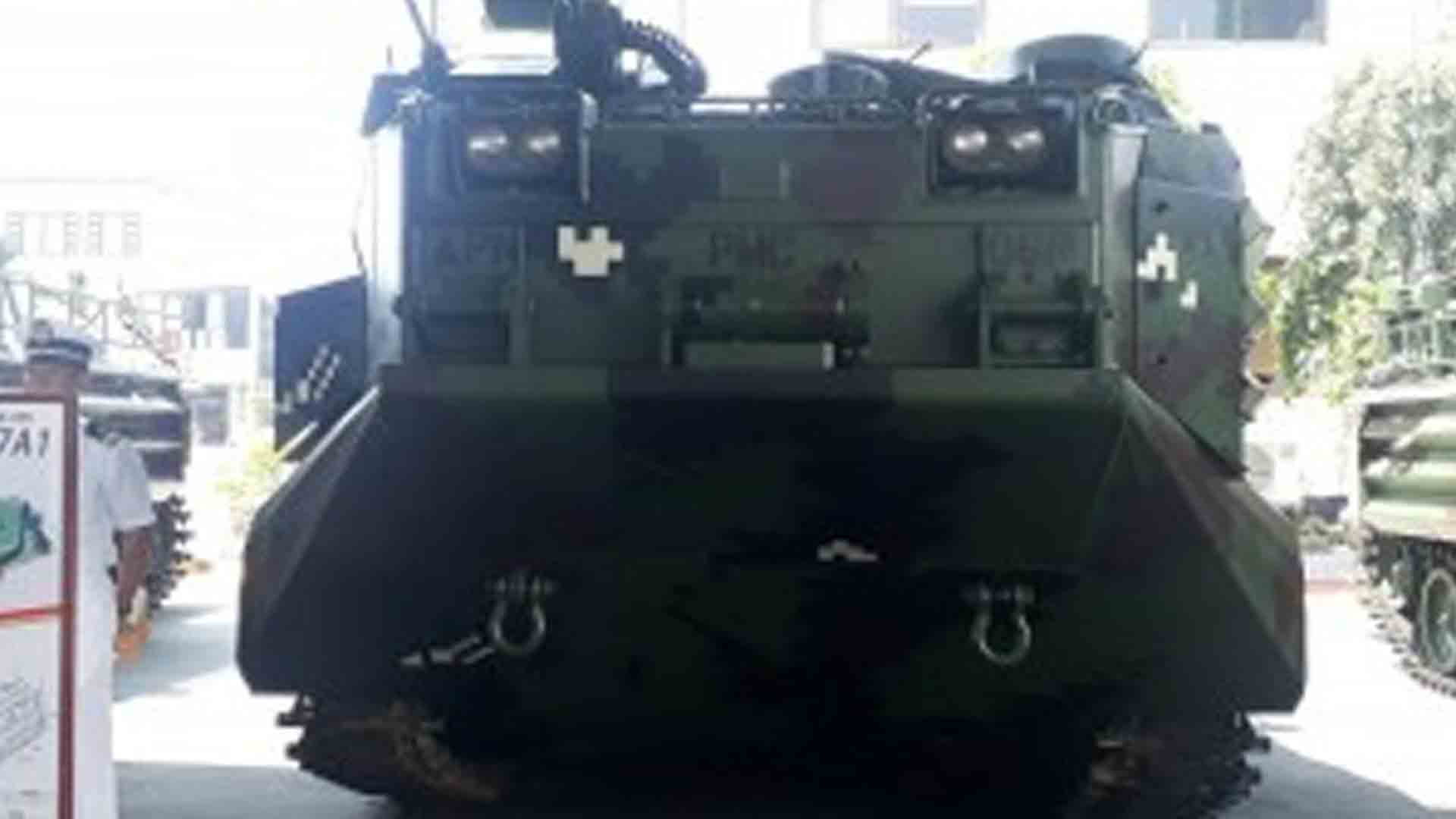






Troops of the Philippine Marine Corps (PMC) handled well the newly-acquired amphibious assault vehicles (AAVs) during the amphibious landing phase of the ongoing ‘KAMANDAG 3’ exercise.
This was disclosed by PMC spokesperson, Capt. Felix Serapio when asked on the performance of the Marines picked to operate the new vehicles.
“They are good. The (amphibious) exercise is the culmination of years of training with forces fluent with the said capability. Our crews were also trained overseas for that (AAV handling),” he said in a message to the Philippine News Agency.
Four of the eight newly-acquired AAVs were deployed in Saturday’s amphibious landing exercises which took place off Marine Base Gregorio Lim off Ternate, Cavite.
Serapio said the four AAVs, which were acquired from South Korean defense manufacturer, Hanwha Systems, were supported by another four AAVs from the US and Japanese contingents participating in the maneuvers.
“The landing is the culmination of the amphibious combined inter-operability training between the three amphibious forces as this further develops the capabilities of our Marines in conducting similar operations,” he added.
Serapio said the PMC’s new amphibious capabilities will boosts the Marines’ capabilities to respond to counter-terrorism scenarios and humanitarian assistance and disaster relief, and territorial defense operations.
“KAMANDAG”, short for “Kaagapay ng mga Mandirigma ng Dagat” scheduled from October 9 – 18, is a Philippine-led military exercise with American and Japanese units.
The AAVs were also used during September’s “DAGIT PA” exercises where it participated in ship-to-shore exercise off Subic Bay, Zambales.
“DAGIT-PA” is short for “Dagat-Langit-Lupa” is a joint exercise with Air Force, Navy, and Army units and ran from September 16 to 27.
The first four AAVs were delivered last May and activated during the 121st founding anniversary of the Philippines which took place June 17 at Naval Base Heracleo Alano in Sangley Point, Cavite.
After its arrival last August, the second batch of four AAVs was activated during short ceremonies at PN headquarters in Naval Station Jose Andrada, Roxas Boulevard, Manila on Sept. 23. The AAV contract is worth PHP2.42 billion.
The amphibious vehicles are armed with .50-caliber machineguns, 40-mm grenade launchers and smoke launchers and will be used for amphibious landing operations. They are based aboard the two strategic sealift vessels of PN which are the BRP Tarlac (LD-601) and BRP Davao Del Sur (LD-602).
Acting Philippine Navy public affairs office chief, Lt. Commander Maria Christina Roxas, earlier said the four AAVs form part of the recently activated Assault Amphibian Company under the Assault Armor Battalion of the PMC.
“These amphibious landing vehicles allow our Marine Operating Forces to assault any shoreline from decks of Navy ships and provide them with armor protection, surface mobility for amphibious and mechanized operations, communications and projection of the ‘anvil’ force coastal defense,” Roxas said. (PNA)


