



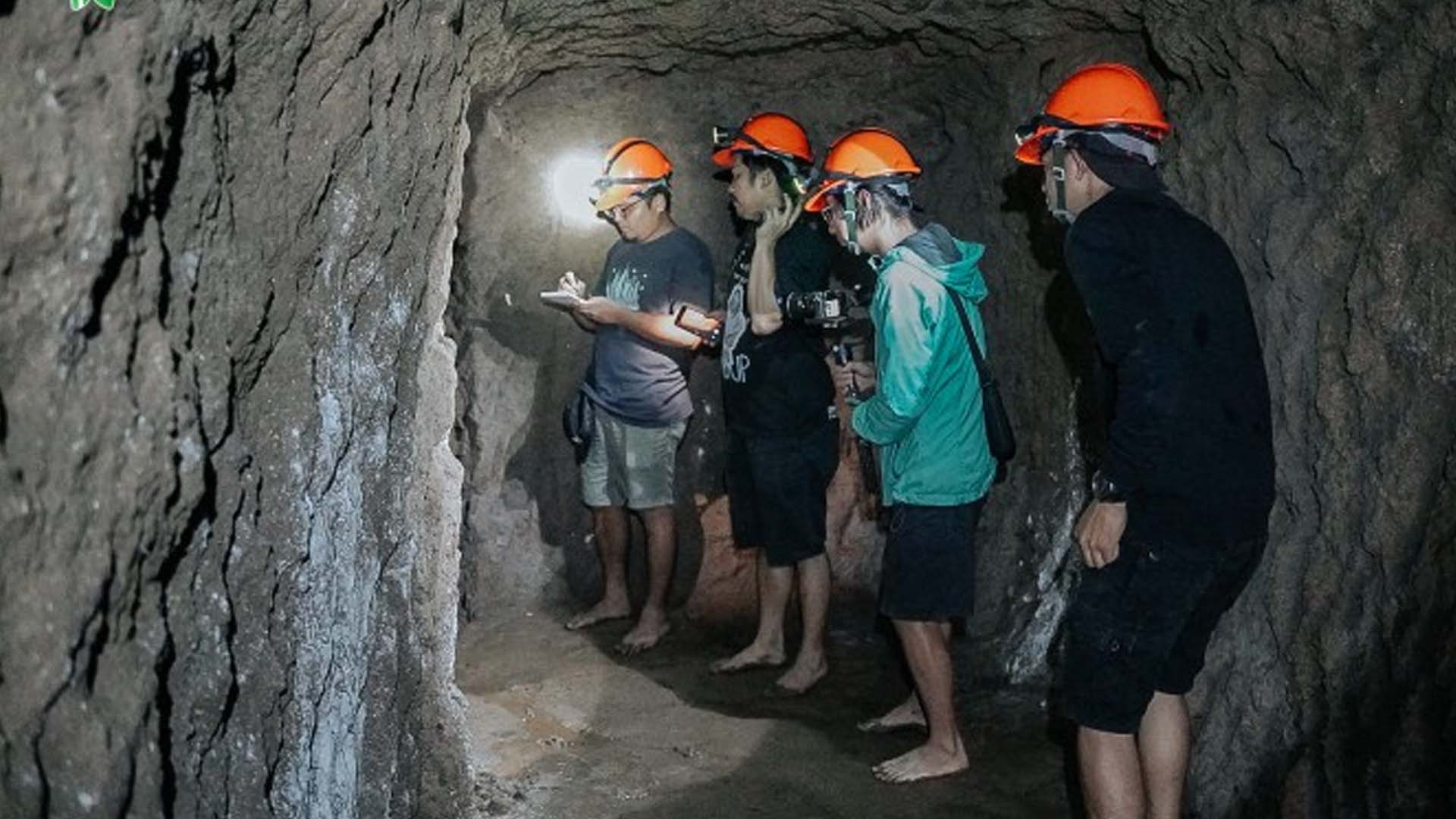







A new historical tourism site in Camalig town in Albay province is expected to provide residents with additional livelihood opportunities.
In an interview on Wednesday, Tim Florece, Camalig spokesperson, said the World War II Japanese tunnel at Quituinan Hill in Barangay Tinago was opened to the public on Tuesday and is seen to further boost local tourism and cultural heritage.
“Extensive restorations were conducted to ensure the safety of tourists and visitors. This included mapping the tunnel, renovating the entrance, and cleaning the pathways and surroundings. Additionally, the team assessed the overall accommodation and capacity for tunnel tours,” Florece said.
Measuring 35 meters in length and two meters in width, the World War II tunnel served as a fortress for the Japanese Imperial Army during its occupation of the Philippines in the 1940s.
“The opening of this historic site will bring about a significant increase in livelihood opportunities. We expect a boost in tourism, job creation, local product sales, business expansion, and agricultural growth. The economic activities in the area will increase,” Florece said.
Tourists are required to pay a fee of PHP20 per person for tourist registration and environmental fees.
For tour guiding services, a maximum fee of PHP100 is charged for a group of five people or less.
Among the restrictions at the tourism site are bringing flammable materials inside, going on tour alone, and acts of vandalism.
Visitors are advised to register and coordinate with the tourism office and follow certain rules to ensure their safety.
“Camalig is committed to preserving and promoting its cultural and historical sites, with the end goal of further increasing tourist visits and revenue, which will, in turn, enhance the provision of basic services for the Camaligueños,” Florece said. (PNA)


