



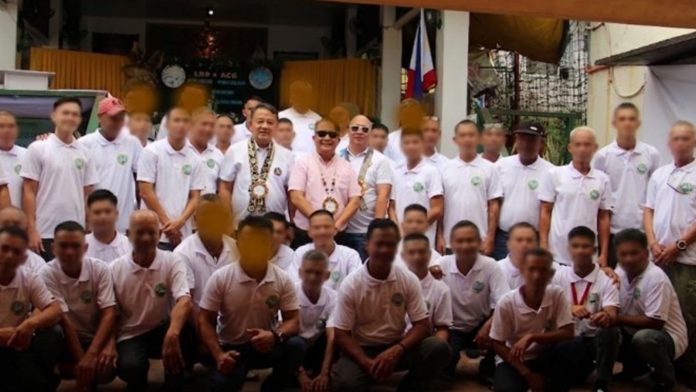






Sixty persons deprived of liberty (PDLs) at the Leyte Regional Prison (LRP) will have the opportunity to earn a college degree while serving their sentences under a new education program launched in partnership with Abuyog Community College (ACC).
Dubbed as Project Paglaum, the program will offer a Bachelor of Science in Entrepreneurship, with formal classes set to begin on Sept. 1. The 60 enrollees will be divided into two sections and attend classes three times a week.
ACC president Clemelle Montallana said on Tuesday the program is a logical continuation of the prison’s education initiatives following the establishment of its junior and senior high school programs.
“There is a need for the Leyte Regional Prison for a continuing education after the establishment of Junior and Senior High School,” Montallana said in an interview, noting that higher education could help PDLs return to society as productive members after their release.
He said the program seeks to equip PDLs with knowledge and livelihood opportunities that could reduce the likelihood of recidivism.
“We know for the fact that if we take care of our persons deprived of liberty, it creates a good opportunity for society not to deal so much with recidivists of crimes,” Montallana told reporters.
The entrepreneurship program was selected based on a short survey of the prospective students and the limitations of offering other degree programs inside the prison, he said.
Montallana said courses such as information technology would require laboratory facilities, while education was considered oversubscribed. Entrepreneurship, meanwhile, focuses on self-employment, business ownership, and partnerships.
The program also considers the requirements of the Commission on Higher Education (CHED), including on-the-job training, which would be difficult for incarcerated students to complete.
Tuition for the students will be fully covered under the government’s Universal Access to Quality Tertiary Education Act.
Montallana said ACC will also include the PDL graduates in its job-placement database and link them with potential employers once they are released.
For the first semester, ACC will deploy six personnel to teach the students, with the number expected to increase to nine in the second semester.
Before classes begin, transportation arrangements for the teaching personnel were discussed and classrooms inside the prison were prepared.
Montallana said the classrooms were constructed by PDLs themselves.
Correction Officer 2 Noli Ann Billo, acting deputy superintendent for reformation of the LRP, said the 60 students were selected based on their eligibility and the expected length of their remaining incarceration.
Applicants were required to have at least five years remaining on their sentences, or expected to remain at the LRP for the next five years, to ensure continuity in the program. Priority was given to PDLs in the maximum security camp.
Of the 60 enrollees, 57 are graduates of the Department of Education’s Alternative Learning System. Most are over 20 years old, while some senior citizens are also among the students.
Billo said the program is the first college education initiative implemented by a prison facility under the Bureau of Corrections, although a similar program is being offered at the New Bilibid Prison through a private organization.
The free college education program at the LRP is also supported by the local government unit of Abuyog and CHED. (PNA)


