


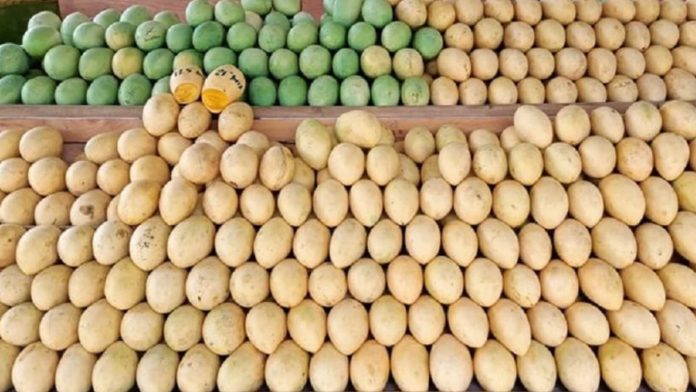






The Department of Agriculture in Davao Region (DA-11) has urged mango growers to improve production, add value to their products, expand market reach and ensure farmers receive a greater share of industry gains as the 2nd Mindanao Mango Congress opened Wednesday.
In his speech, DA-11 Regional Director Macario Gonzaga emphasized the need to widen market access not only locally and nationally but also internationally, where Philippine mangoes can compete.
“As a testament to our growing export potential, Davao mangoes are set to reach the markets of South Korea and Japan, following the assessment of our produce by David Park, president of Sae Kyoung Co. of South Korea, and Wismettac Foods Inc. of Japan,” Gonzaga said.
He underscored that farmers remain the heart of the industry and must be supported with opportunities in technology, financing, infrastructure, processing and reliable markets to build the distinct identity and quality of Mindanao mangoes.
Gonzaga also called for strengthening the value chain — from production and post-harvest handling to processing, packaging and marketing.
“We need to invest in postharvest facilities to reduce losses and maintain quality. We also need to encourage processing and value-adding enterprises so farmers and cooperatives can move beyond selling fresh produce and explore higher-value products,” he added.
Gonzaga further urged stronger collaboration among farmers’ groups, local government units (LGUs) and national agencies to sustain industry growth.
The Philippines produces about 579,174 metric tons of mangoes annually, with Mindanao providing livelihood and economic opportunities to thousands of farmers, traders, processors and stakeholders.
In Davao Region alone, production averages 36,333 metric tons yearly, making it one of the country’s leading mango-producing areas.
“We have mango-producing communities in Davao del Sur, particularly in Digos City, Matanao, and Malalag, and in Samal, Davao del Norte, where mango has become more than just a crop. It is a source of livelihood and a product that carries the identity and pride of our region,” Gonzaga said.
The three-day congress is spearheaded by the Mindanao Integrated Mango Stakeholders Association and the Davao Region Integrated Mango Agribusiness Council Inc., in partnership with DA-11. (PNA)