








OCTA Research said the political landscape for the 2028 elections may be entering a new and far more competitive phase after its latest Tugon ng Masa survey showed the hypothetical tandem of former Vice President Leni Robredo and Senator Raffy Tulfo leading the Sara Duterte and Senator Imee Marcos tandem for the first time.
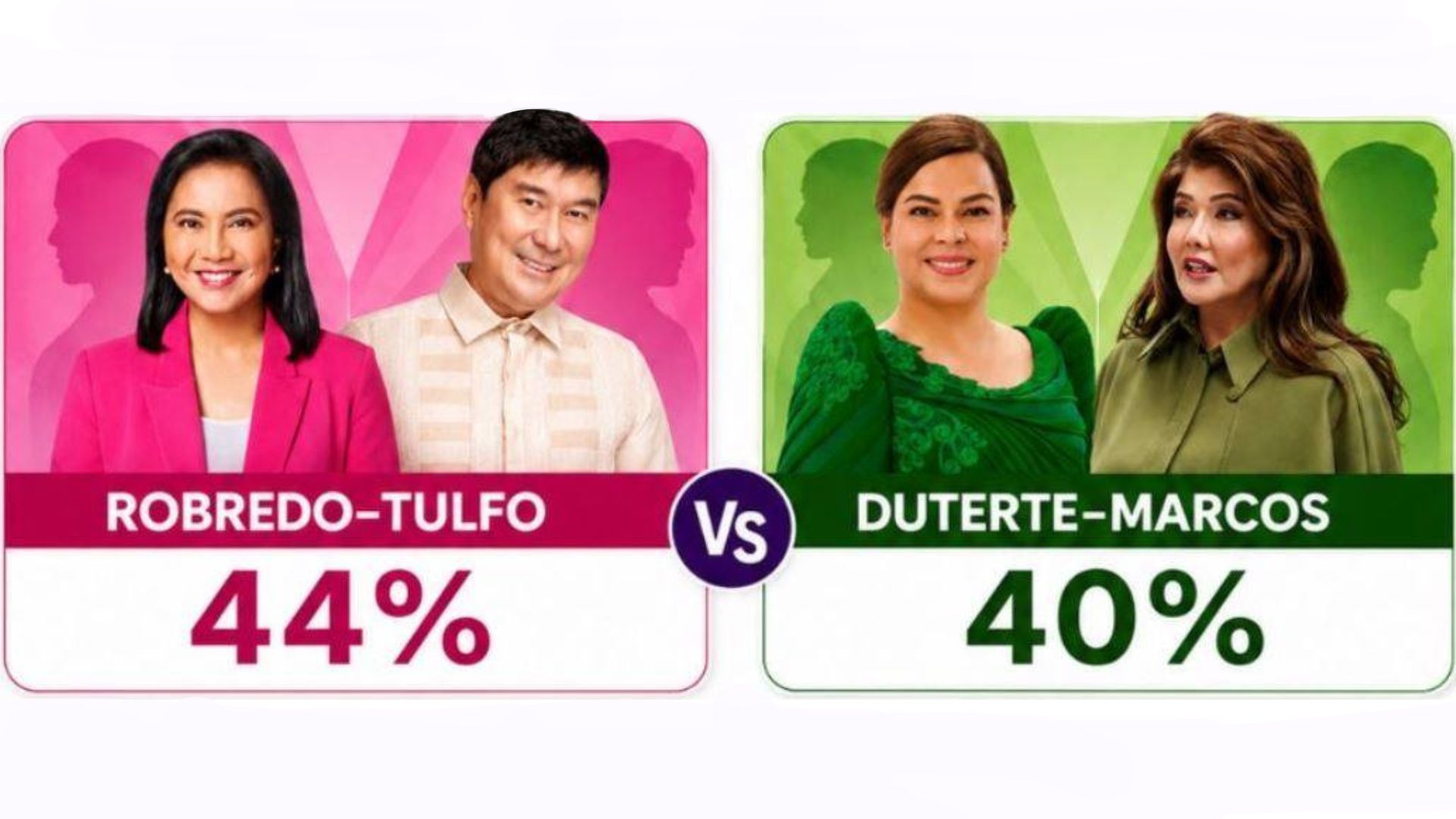
According to OCTA Research, the Robredo–Tulfo tandem registered 44 percent support nationwide, compared to 40 percent for the Duterte–Marcos pairing. Sixteen percent of respondents said they remained undecided.
OCTA Research emphasized that the findings should not be interpreted as a prediction of the 2028 election outcome, but rather as an early snapshot of public sentiment. Still, the survey organization acknowledged that the results represent the first recorded instance in its comparable tandem surveys where a Robredo-led coalition numerically surpassed a Duterte–Marcos alliance.
The significance of the findings lies less in the four-point margin and more in what it symbolizes politically. For years, the Duterte political machinery has projected an image of inevitability and dominance, especially after the sweeping victories associated with the Duterte and Marcos coalitions in recent national elections. The OCTA Research survey now suggests that such dominance may no longer be politically unchallenged.
OCTA Research noted that previous commissioned surveys over the past year generally showed Duterte–Marcos leading hypothetical opposition tandems by margins ranging from 15 to 25 percentage points. Against that backdrop, the latest survey represents a dramatic tightening of the race.
The survey organization also pointed out that the Robredo–Tulfo tandem’s strength comes primarily from vote-rich areas outside Mindanao. NCR and Balance Luzon emerged as particularly strong territories for the tandem, indicating a possible consolidation of reform-oriented and opposition-oriented voting blocs.
Political observers may also interpret the results as evidence that the Philippine electorate remains fluid and capable of rapid shifts depending on governance performance, political alliances, economic conditions, and public perception.
At the same time, OCTA Research cautioned that the race remains highly competitive. While Robredo–Tulfo holds a numerical lead, the survey’s margin of error means the findings should still be interpreted carefully. Duterte–Marcos continues to possess formidable structural advantages, especially in Mindanao where support remains overwhelming.
Still, the broader implication of the survey is difficult to ignore. The political conversation surrounding 2028 is no longer about whether there is an alternative national coalition capable of challenging Duterte-aligned forces. The latest OCTA Research findings suggest that such a coalition may already be forming.
More importantly, the survey signals that Philippine politics may be entering an era defined less by dominance and more by polarization, regional competition, and shifting coalitions. The old certainty surrounding national electoral outcomes may now be breaking apart.


