









Ten local government units (LGUs) in Western Visayas were identified as initial recipients of the Philippine Community Resilience Project (PCRP), the newest modality of the Kapit-Bisig Laban sa Kahirapan-Comprehensive and Integrated Delivery of Social Services (KALAHI-CIDSS), with PHP580 million worth of sub-projects to be implemented in the next three years.
KALAHI-CIDSS Deputy Regional Program Manager Silverio Von Maguad III, on Thursday, said that from the name itself, the focus of the World Bank-funded modality is to ensure resilient communities.
“The main objective is to strengthen our community capacity to participate in resilience planning and not rely solely on the local government unit. People from the barangay, from the community, are there to participate; their voices will be heard,” he said in an interview.
The PCRP sub-projects target to benefit 332 barangays from 10 municipalities, namely Caluya, Valderrama, San Remigio, Tibiao and Pandan in Antique; Madalag and Libacao in Aklan and Concepcion, Carles and San Joaquin in Iloilo.
They were chosen based on high poverty incidence, which is over the 18.1percent national average, environmental and natural hazard exposure, high stunting rates, and a high percentage of Indigenous People.
First to third class LGUs are allocated PHP50 million for their sub-projects, and PHP70 million for the fourth to sixth class.
They are also required to have a counterpart, equivalent to 20 percent of the total grant allocation, in cash or in kind.
“The community can propose almost any project as long as it is not on the negative list. Just like any project, they should pass the project feasibility,” Maguad said.
The sub-projects can be resilient facilities for infrastructure, resilient livelihood and ecosystem conservation, and nature-based solutions.
Currently, Maguad said they are in the process of completing their staff for the area coordinating teams that will be assigned in the municipalities.
Once the project implementation is completed, he said they hoped to leave behind a self-reliant community capable of thriving in long-term climate adaptation.
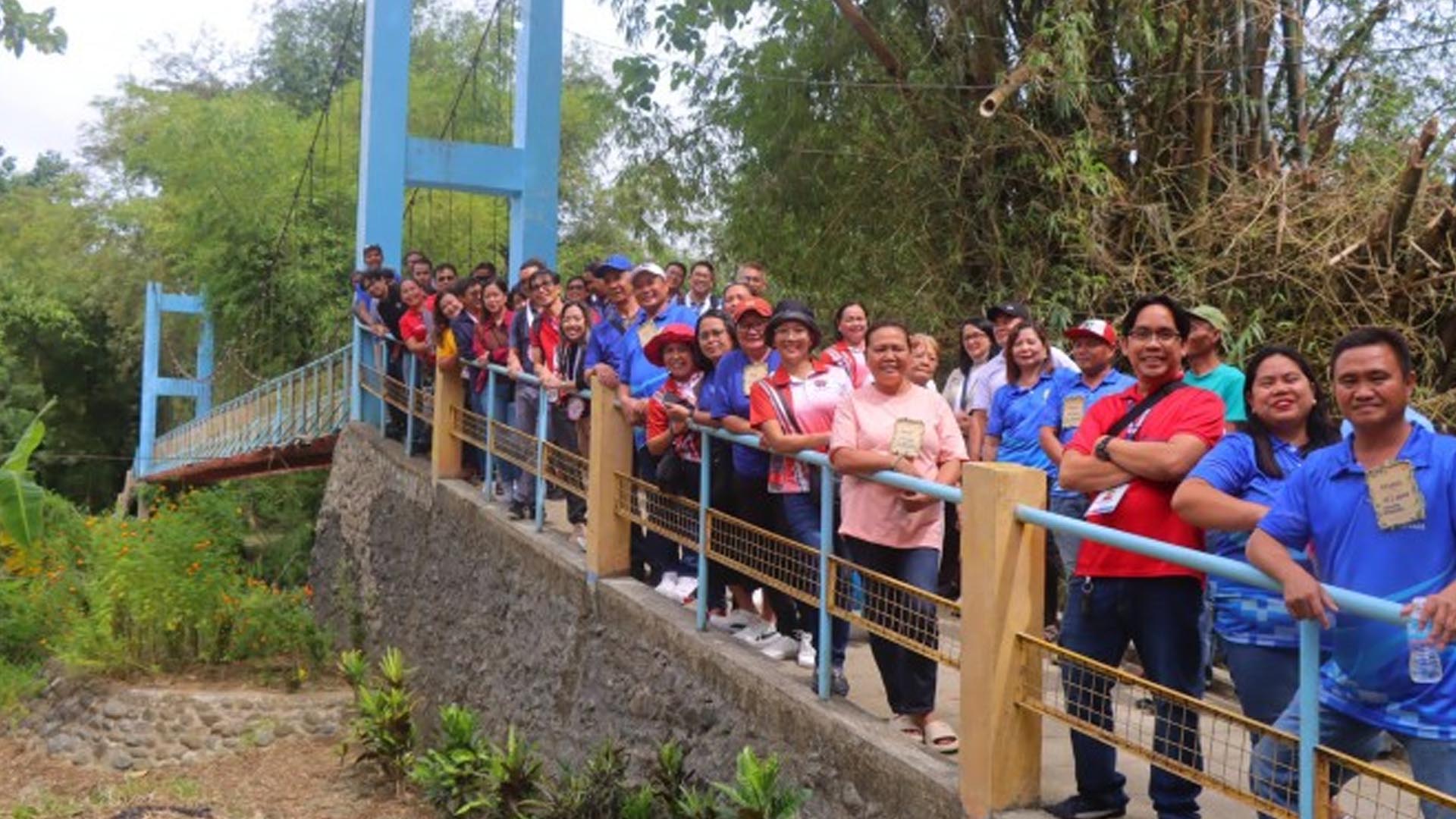
Meanwhile, a team from the Asian Development Bank conducted a technical visit in Iloilo last week, in relation to the proposed PCRP expansion.
The team composed of 18 consultants visited KALAHI-CIDSS sub-projects in the municipalities of Maasin and Janiuay.
The results of their field visits and focus group discussions with local government units, barangay local government units, beneficiaries and community volunteers will serve as inputs in the expansion of the PCRP.
The KALAHI-CIDSS program is a community-driven development initiative that has been implemented nationwide by the Department of Social Welfare and Development since 2002. (PNA)


