



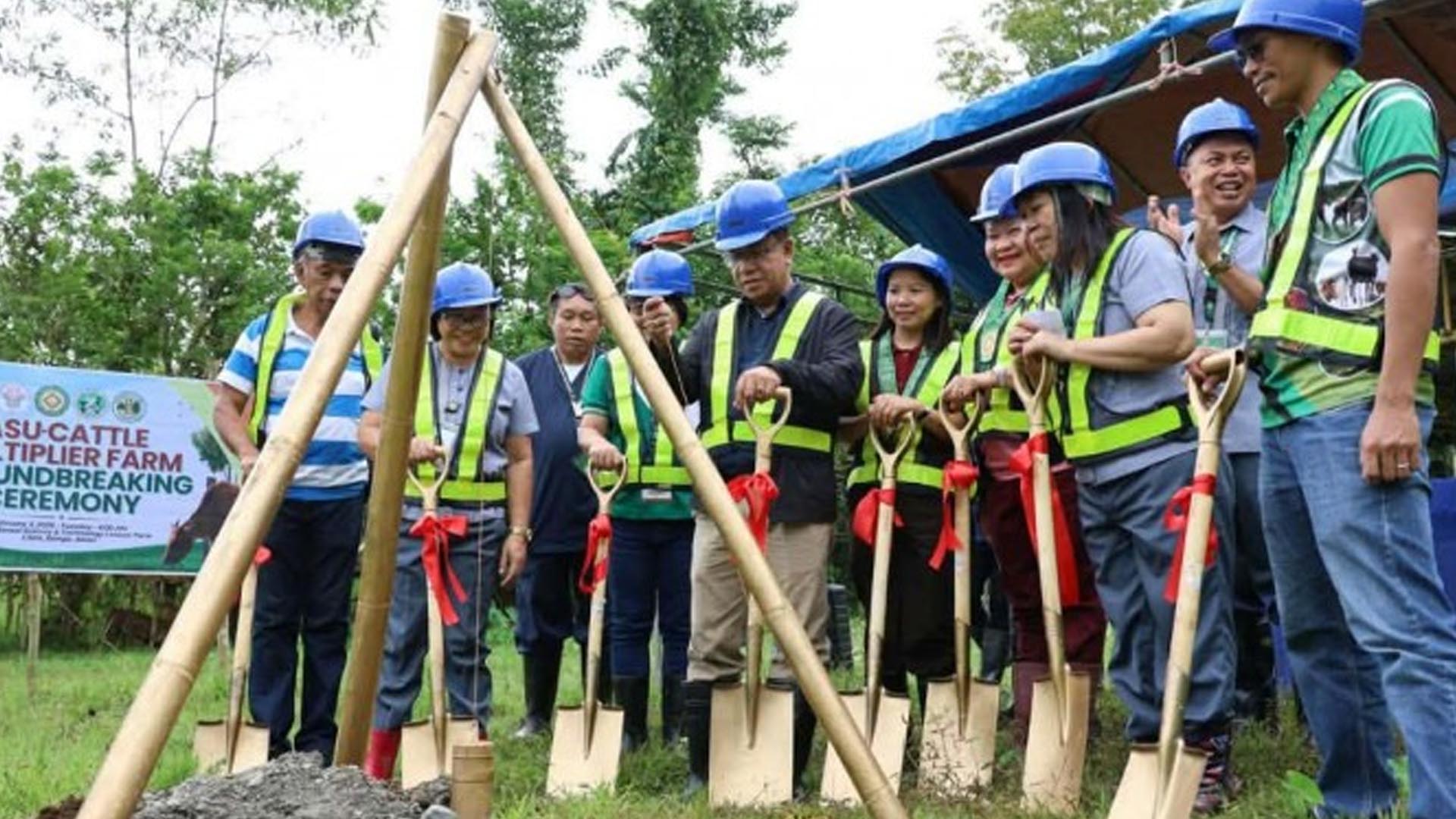






A cattle multiplier farm will soon rise at the Agri-based Science and Technology Farm of the Aklan State University (AS) in Banga, Aklan.
The project, which broke ground on Tuesday, has a PHP4.5-million initial funding support from the Department of Agriculture National Livestock Program (NLP) to equip the farm with upgraded cattle housing, breeding, waste management and research operations.
The multiplier has a capacity of 20 heads –19 cows and one bull.
“The project is part of the NLP’s nationwide strategy to strengthen livestock production systems, reverse the declining local cattle production, and reduce the country’s reliance on imported beef,” the DA said in a news release on Friday.
It seeks to boost the supply of quality breeders, support farmers through dispersal program, contribute to climate-resilient and sustainable livestock systems in Aklan and its neighboring provinces, and position ASU as a key player in revitalizing the cattle industry in Western Visayas.
It is also expected to further strengthen the university’s position as a regional hub for livestock training, technology transfer, and community-based extension programs.
Project leader professor Ma. Rema Lauron said ASU was identified as a strategic partner due to its strong Animal Science program, technical expertise, and established capacity for research and extension services.
“Although ASU’s facilities were not originally designed for large ruminants, the university has the academic foundation and regional relevance needed to host a modern, science-based breeding center,” Lauron said.
She said the farm will serve as a “living laboratory” for faculty, students, and researchers, providing hands-on experience and contributing to innovations in livestock management, animal health, and sustainable farming practices. (PNA)


