

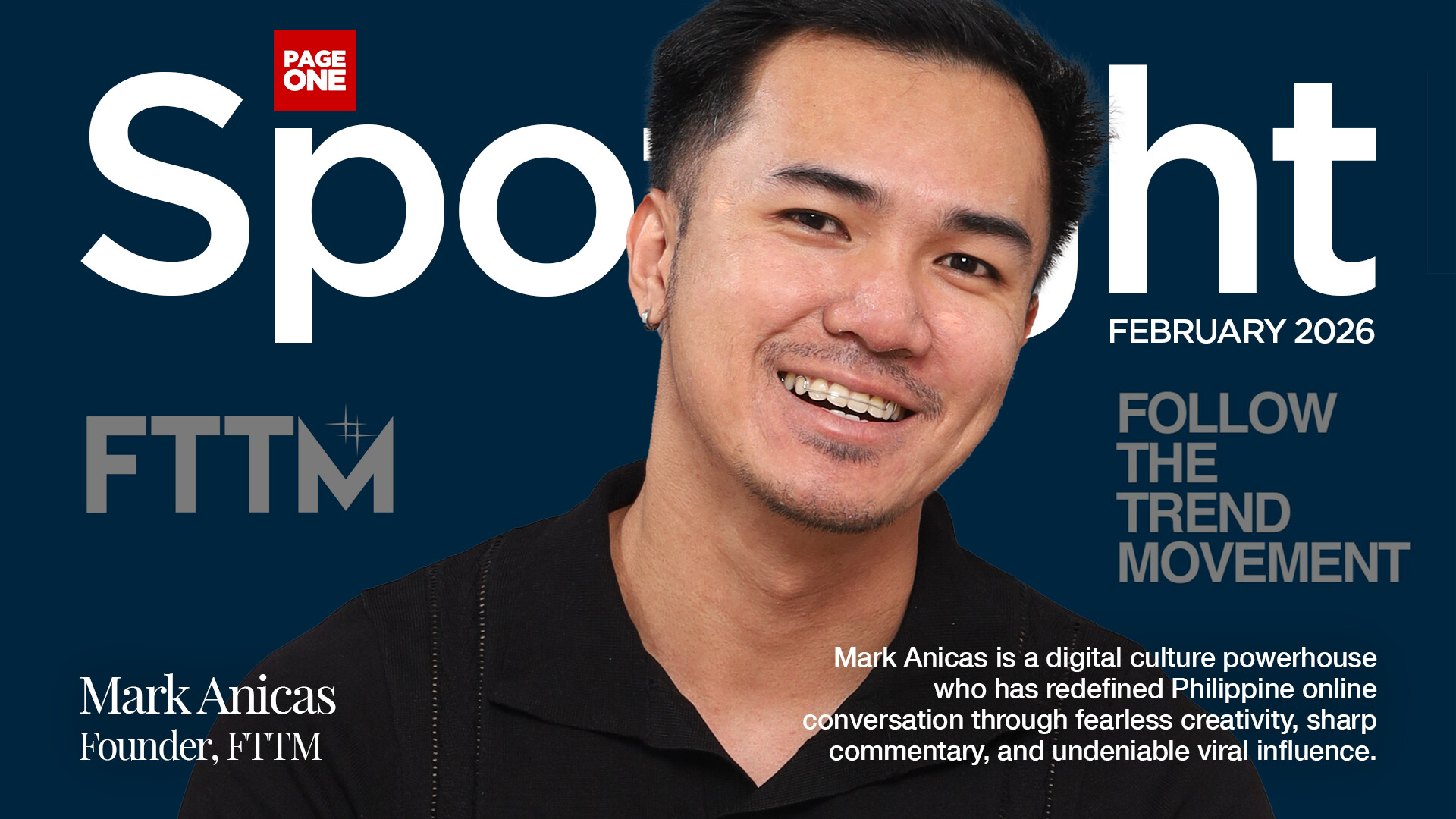






Before FTTM became a force in online discourse, before the name circulated in comment threads and sparked reflection on political accountability, it began with a young creative searching for himself.
Mark Anicas, now the Media Director behind Follow The Trend Movement, once pictured a very different life. As a student in Vigan City, he imagined himself crunching numbers as an accountant, drawn to math and encouraged by mentors who said he had an aptitude for it. He completed a degree in Business Management, majoring in Management Accounting at the University of Northern Philippines and even took up an internship at the Commission on Audit. It was there he realized the path he chose might make sense on paper but not in his heart.
The transition toward creativity was gradual but unmistakable. While still in university, Anicas found himself drawn to writing and photography, captivated by the freshness of each task, the thrill of creation, and the space for experimentation they offered. Before long, his blog began attracting attention. A local publishing house approached him with the chance to be published. At just 18, he released Art of Hugot. After graduation, ABS-CBN Publishing Inc. invited him to contribute to NoInk, its pop culture section. These early forays into creative work hinted at something larger on the horizon.
Then FTTM happened.
What began as a page with a simple, meaningful ambition soon carried weight beyond memes. The original name, Filipino Tweets That Matter, reflected an early intention: to highlight content that mattered. The platform’s evolution into Follow The Trend Movement mirrored its expanding role in sociopolitical dialogue. “The reality is FTTM has always been political,” Anicas says, noting that what changed was the clarity of purpose. There came a moment when it was no longer just about posting viral content; it was about shaping how a community understood issues, discussed them, and defended their opinions in spaces where those conversations were often missing.
The transformation didn’t happen with fanfare; it happened in the daily exchanges where people began to do more than scroll. Comment threads turned into thoughtful debate. Think pieces and arguments emerged organically beneath posts that once would only have collected likes. The page had crossed into territory most creators never reach: it became part of a larger conversation, one that mattered beyond its digital walls.
Growth brought both visibility and vulnerability. In the early stages, maintaining anonymity for Anicas was crucial. It wasn’t a branding decision; for him, it was a protective one. As the platform’s tone sharpened, so did the risks. In an environment where dissent can lead to surveillance, backlash, or even personal threats, anonymity to him offered a form of safety. It allowed Anicas to focus on ideas instead of identity and encouraged audiences to engage with arguments rather than personalities. That distance shaped the integrity of the work, giving it a clarity unclouded by personal bias.
Protecting that clarity also meant knowing what he would not sacrifice. There were lines he refused to cross, even if doing so might boost engagement. “One belief I refuse to compromise, even if it costs engagement, is not using my platform to protect power at the expense of people,” he says. That principle informs every piece of content: no distortion of facts, no softening harm, no excuse-making for abusive behavior. Neutrality, in his view, is complicity when power is uneven. He would rather lose followers than normalize violations or teach people to value comfort over truth. For Anicas, influence is not a metric; it’s moral agency.
FTTM is often discussed as a movement, a platform, or a prominent page. But at its core, it reflects the life and choices of someone who once walked away from a conventional path, embraced uncertainty, and built something that now demands responsibility. Mark Anicas did not set out to create a movement, yet the movement he leads carries traces of every pivot he made, from the student who loved numbers to the writer with a blog to the Media Director who helps others see what matters. The sacrifice was real, and the cost was personal, but the work stands as proof that what matters most often begins in the quiet decisions we make long before others notice them.


