



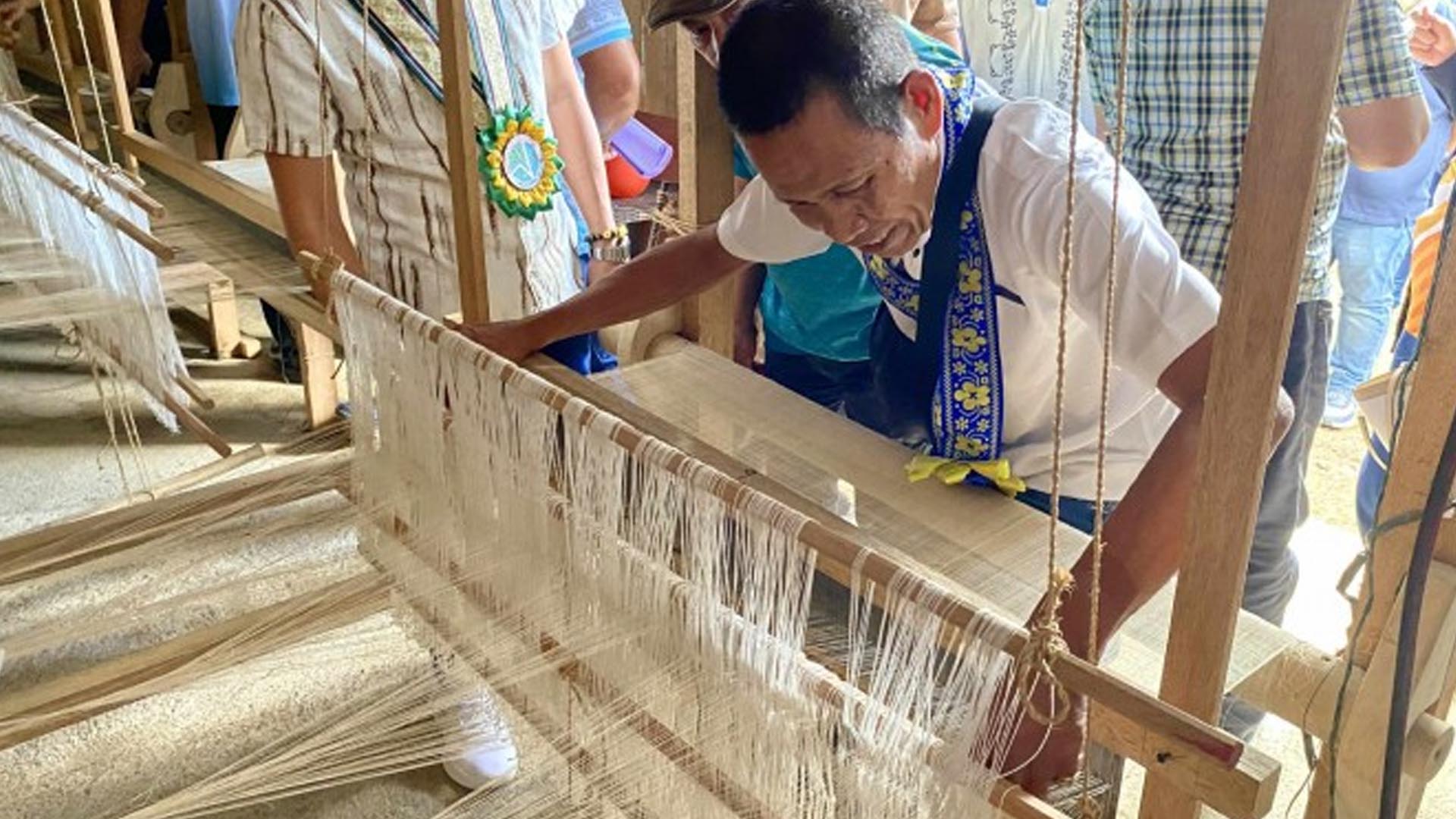






Northern Samar’s abaca industry has taken a major leap forward with the inauguration and turnover of the Abaca Fiber and Cloth Production Facility for the Luisita Abaca Workers Association (LAWA) in Victoria town on Friday.
Funded through a PHP498,550 grant from the Department of Labor and Employment’s Integrated Livelihood Program (DILP), the project was implemented under the Barangay Livelihood Empowerment and Sustainability Program of the Provincial Economic Development and Investment Promotions Office (PEDIPO).
PEDIPO head Jhon Allen Berbon, in a phone interview on Friday, said the association received tools, equipment and training support vital for abaca fiber production and cloth weaving.
To enhance the community’s skills, Berbon said they also partnered with the Philippine Fiber Industry Development Authority to conduct training sessions on abaca fiber extraction, classification and weaving techniques.
“These efforts aim to help the association shift from selling raw abaca fiber to producing high-value woven products. Once reliant on raw fiber sales, the community of Barangay Luisita is now moving up the value chain by transforming its abaca harvests into woven cloth and processed fiber goods,” Berbon told the Philippine News Agency.
“This development is expected to increase the income of local farmers and workers while promoting Victoria’s growing creative and agritourism sectors,” he added.
With the facility now operational, Victoria is poised to become the first “Abaca Processing Capital” in Eastern Visayas—a recognition that underscores its emergence as a hub for sustainable enterprise and craftsmanship.
Victoria Mayor Joey Ardales said the project not only enhances economic opportunities but also strengthens Victoria’s identity as a destination for eco-friendly and heritage-based tourism.
Abaca, commonly known as Manila hemp, holds significant economic importance in Northern Samar, being one of the province’s priority commodities.
According to the Philippine Statistics Authority, 60 percent of the region’s abaca output comes from Northern Samar.
In 2024, Northern Samar yielded 656.14 metric tons of abaca fiber, according to PhilFIDA.
The presence of bunchy top and mosaic virus diseases on Leyte Island in the past decades has prompted the government to focus the planting expansion in Samar provinces. (PNA)


