



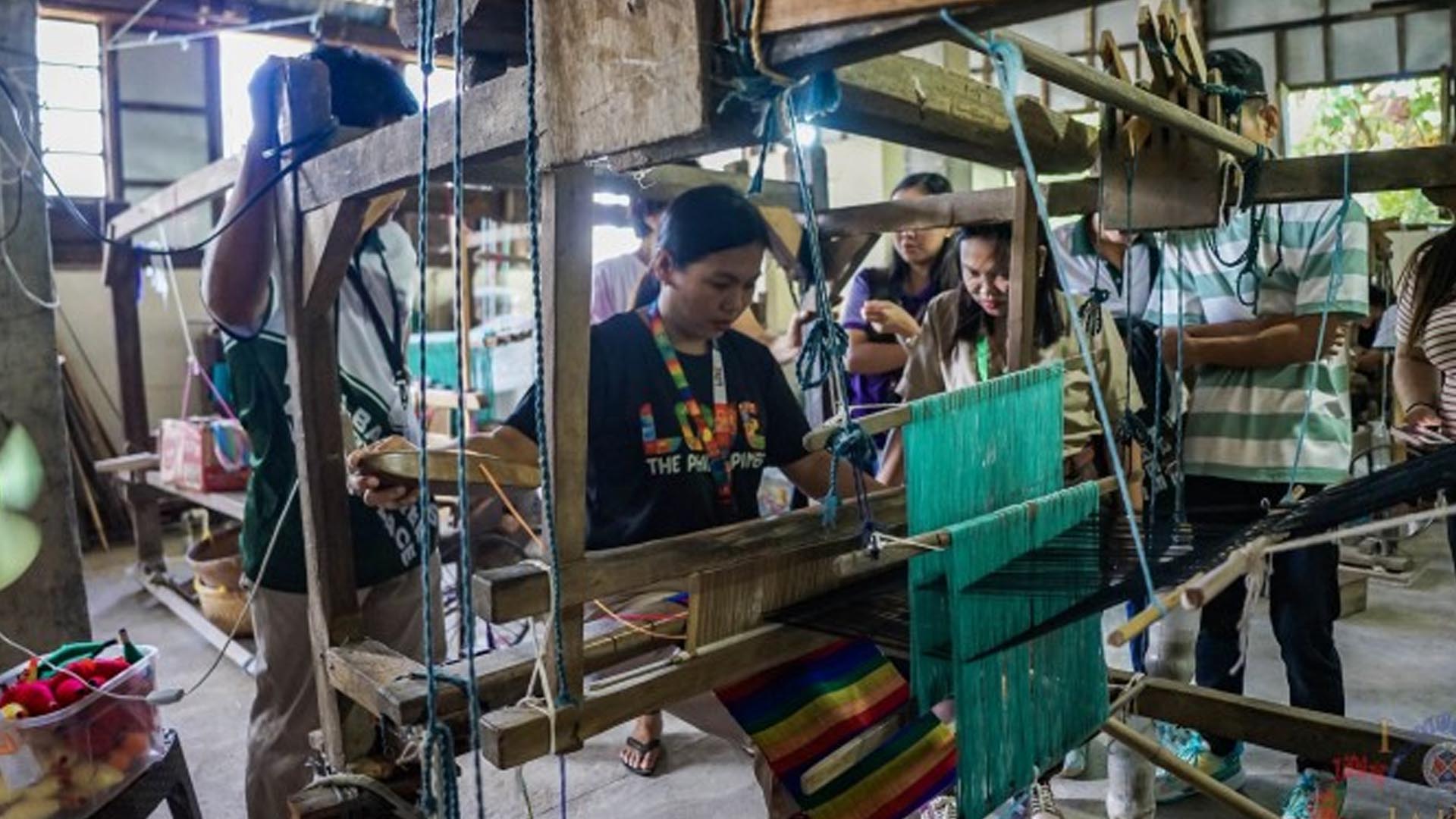






A party-list lawmaker is pushing for the use of neo-ethnic Philippine textiles in the academic regalia of all state universities and colleges (SUCs) and local universities and colleges (LUCs) to help preserve Philippine tradition and culture.
Bill 3111, or the Philippine Neo-Ethnic Textile Development bill, filed at the House of Representatives seeks to preserve, support, and institutionalize the Philippine handloom weaving industry.
Neo-ethnic textiles refer to textiles made of or containing natural or indigenous materials, sourced and/or produced in the Philippines using updated, relevant, and green scientific and technological approaches and innovations, while integrating and/or retaining traditional patterns, designs, icons, motifs, and/or approaches.
The bill pushes for the recognition of weaving as intangible cultural heritage; provides sustained government support for skills transmission, production, innovation, and marketing; and empowers weavers, especially women, with access to livelihood, training, infrastructure, and social protection.
It also calls for the establishment of a National Neo-Ethnic Textile Development Policy, which shall include the formulation of a neo-ethnic textile industry roadmap; development of a database of neo-ethnic Philippine textiles; innovations in weaving design and engineering; technical support mechanism for sustainable weaving activities; and development of Philippine Standards for Handloom Woven Textiles.
“We want to protect and develop the old tradition of handloom weaving in the country, so the prescribed use of our indigenous textiles in academic regalia is a key provision of our bill,” Solid North Party-list Rep. Ching Bernos said in a statement Saturday.
“This would make an instant, and hopefully lasting impact, in our local weaving communities. Sa pamamagitan din nito, nasisiguro natin na may demand sa mga produkto ng ating mga katutubong manghahabi kaya’t mahihikayat sila na ipagpatuloy ang kanilang tradisyon (Through this measure, we ensure demand for our native weavers’ products, encouraging them to continue their tradition).”
She added that the measure would help address the multiple challenges that threaten the continued existence of handloom weaving in the country, among them aging weavers and limited transmission of skills to younger generations, inconsistent access to quality raw materials, limited market access and promotion, inadequate infrastructure support, and lack of institutional protection and development programs.
“We have an opportunity to preserve our beloved weaving traditions and at the same time capitalize on worldwide interest in indigenous materials,” Bernos said.
“This is why the government has to step in to ensure that our local artisans and our intangible cultural heritage are not merely taken advantage of, then discarded, but actually benefit from the fruits of their labor and knowledge.” (PNA)


