



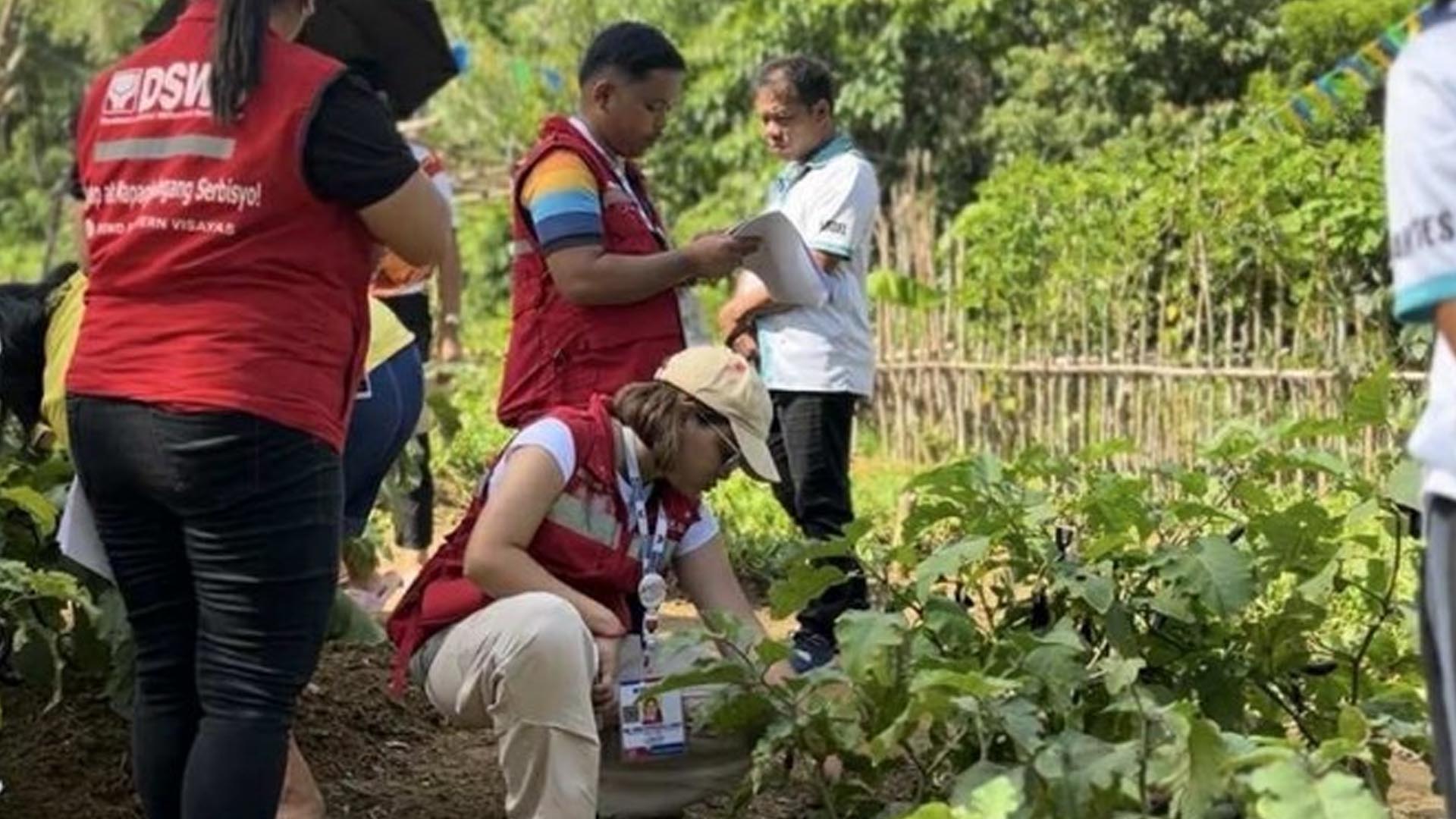






The Department of Social Welfare and Development (DSWD) has released PHP31.59 million to poor families in Eastern Visayas for a program designed to mitigate the impact of food insecurity and water scarcity.
The amount represents the payment to 3,900 individuals who took part in training and work in Northern Samar, Eastern Samar, Samar, and Southern Leyte provinces under Project LAWA (Local Adaptation to Water Access) at BINHI (Breaking Insufficiency through Nutritious Harvest for the Impoverished).
Each received PHP7,500 during the payout activities on different dates from January to June, DSWD 8 (Eastern Visayas) information officer Jonalyndie Chua said in a phone interview on Thursday.
These beneficiaries have completed all three stages of Project LAWA at BINHI, consisting of a three-day learning and development session, 15 days of actual work, and two days of sustainability training.
In the last two days of the project’s implementation, partner beneficiaries underwent a workshop to ensure the sustainability of the projects, Chua said.
“These projects are not just designed to attain food security but to achieve disaster resilience, as well. We are pushing to make these technologies be part of local government unit (LGU) activities. We have signed an agreement with LGUs to make the project part of sustainability mechanisms,” Chua told the Philippine News Agency.
The DSWD has been holding comprehensive training encompassing disaster risk reduction, climate change adaptation, rehabilitation of water systems, communal gardening, vermicomposting, and hydroponics.
The covered areas are Almagro, Matuguinao, Sta. Margarita, Catbalogan City, Sta. Rita, Villareal, and San Jose de Buan in Samar; Catubig, Gamay, Lapinig, Silvino Lubos, and Lope de Vega in Northern Samar; Oras, Dolores, Jipapad, San Policarpo, and Maslog in Eastern Samar; and San Ricardo, Bontoc, Silago, Sogod, and Libagon in Southern Leyte.
As part of the design of Project LAWA at BINHI, the DSWD provides each partner-beneficiary with the daily minimum regional wage rate of PHP405 for attending the training and participating in the projects in their respective communities.
Under Project LAWA, the DSWD focuses on enhancing water access and management in communities prone to drought and water shortages by constructing small farm reservoirs, repairing or rehabilitating water harvesting facilities, and diversifying water supplies, among others.
On the other hand, Project BINHI aims to promote food security and nutrition in communities by facilitating the adoption of climate-resilient and sustainable agricultural practices, such as communal and urban gardening, vermicomposting, and the planting of disaster-resilient crops, fruit-bearing trees, and mangroves, among others. (PNA)


