



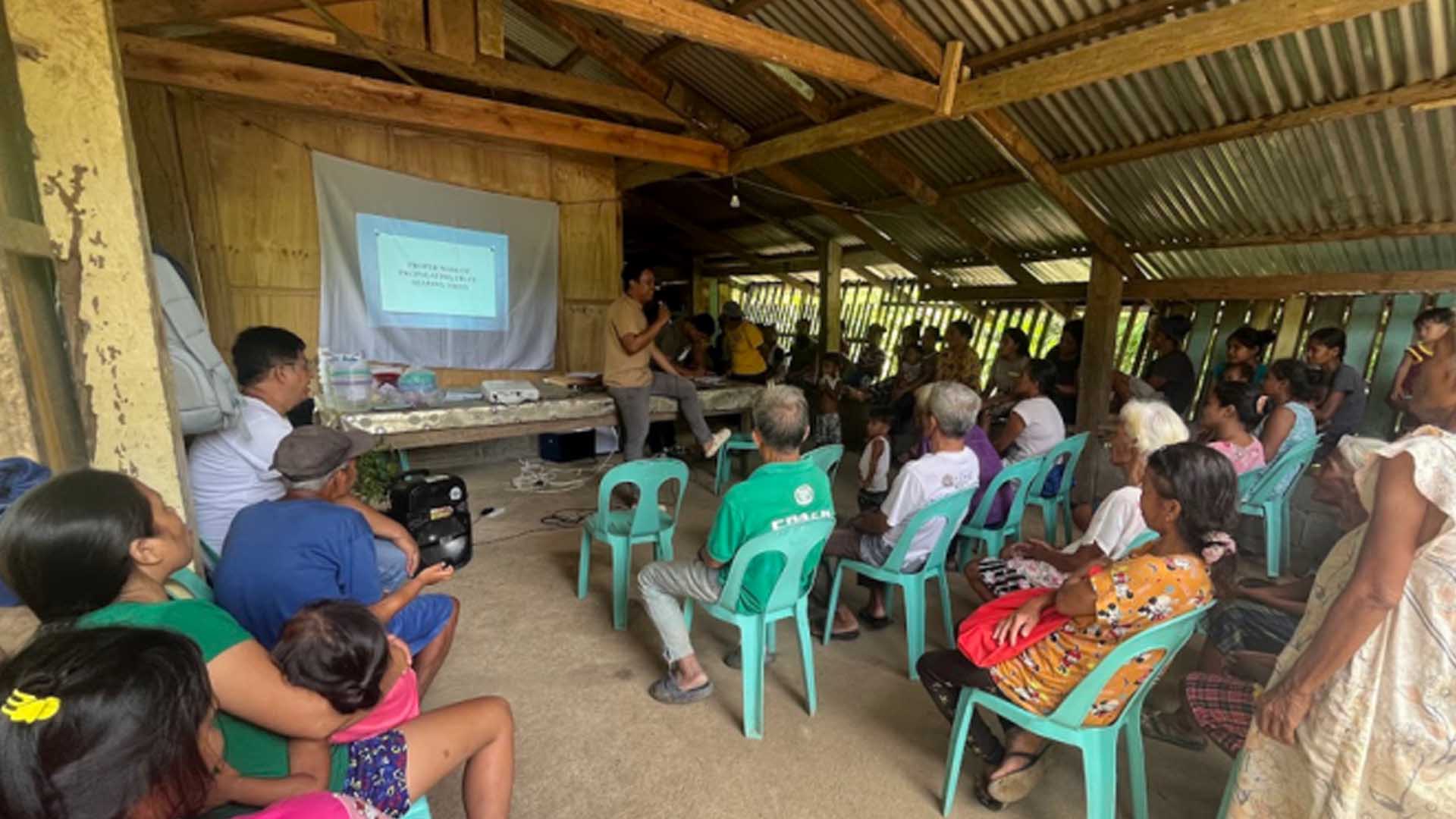






The Department of Agriculture (DA) Calabarzon (4-A) is set to increase the number of beneficiaries of its Farm and Fisheries Clustering and Consolidation (F2C2) program next year to encourage more agricultural sector workers to form cooperatives and achieve economies of scale.
Jhona Santiago, DA 4-A’s F2C2 focal person, said in an interview on Wednesday that the department targets to extend logistical and training support to an additional 48 clusters in the region’s five provinces in 2024.
The F2C2 program aims to assist cultivators of rice, corn, assorted high-value crops and livestock, among other agricultural goods, to enhance their productivity through the provision of high-quality seeds, planting materials, and fertilizer subsidies.
The government also makes available to farmers various planting and harvesting machinery, as well as entrepreneurial training opportunities to help them grow their livelihoods.
“Right now, we are waiting for the letter of intent for those interested associations and cooperatives. After that we will conduct validation, profiling, and needs assessment for each cluster so we can determine the number of farmers per association,” Santiago said.
From 2021 to 2023, a total of 49,087 farmers benefited from the F2C2 program.
“We aim to promote the grouping of small farmers and fishermen to develop their livelihoods while they learn to do business and achieve economies of scale or lowering production costs,” she added.
Santiago disclosed that training made available to beneficiaries includes organizational management, financial management, business plan preparation, and product development.
While the initial focus of the program is to gather farmers in clusters with similar products and production systems, it also serves as a strategy so that more farmers could benefit from distributed interventions in the coming years, according to her.
Meanwhile, Santiago said Agro-Enterprise Clustering Approach (AECA) was also introduced to farmers to aid them in collective marketing.
Farmers are encouraged to synchronize their planting and organize themselves, increasing their potential for partnership with institutional buyers, including Jollibee Foods and Ramen Nagi, while the majority supplies in the local communities.
Santiago said the DA is grateful to farmers for their continued support for this program and for their crucial role in attaining food security.
“We hope that in the future, we can improve the lives of the Filipino farmers by the clustering and consolidation program of DA,” she added. (PNA)


