



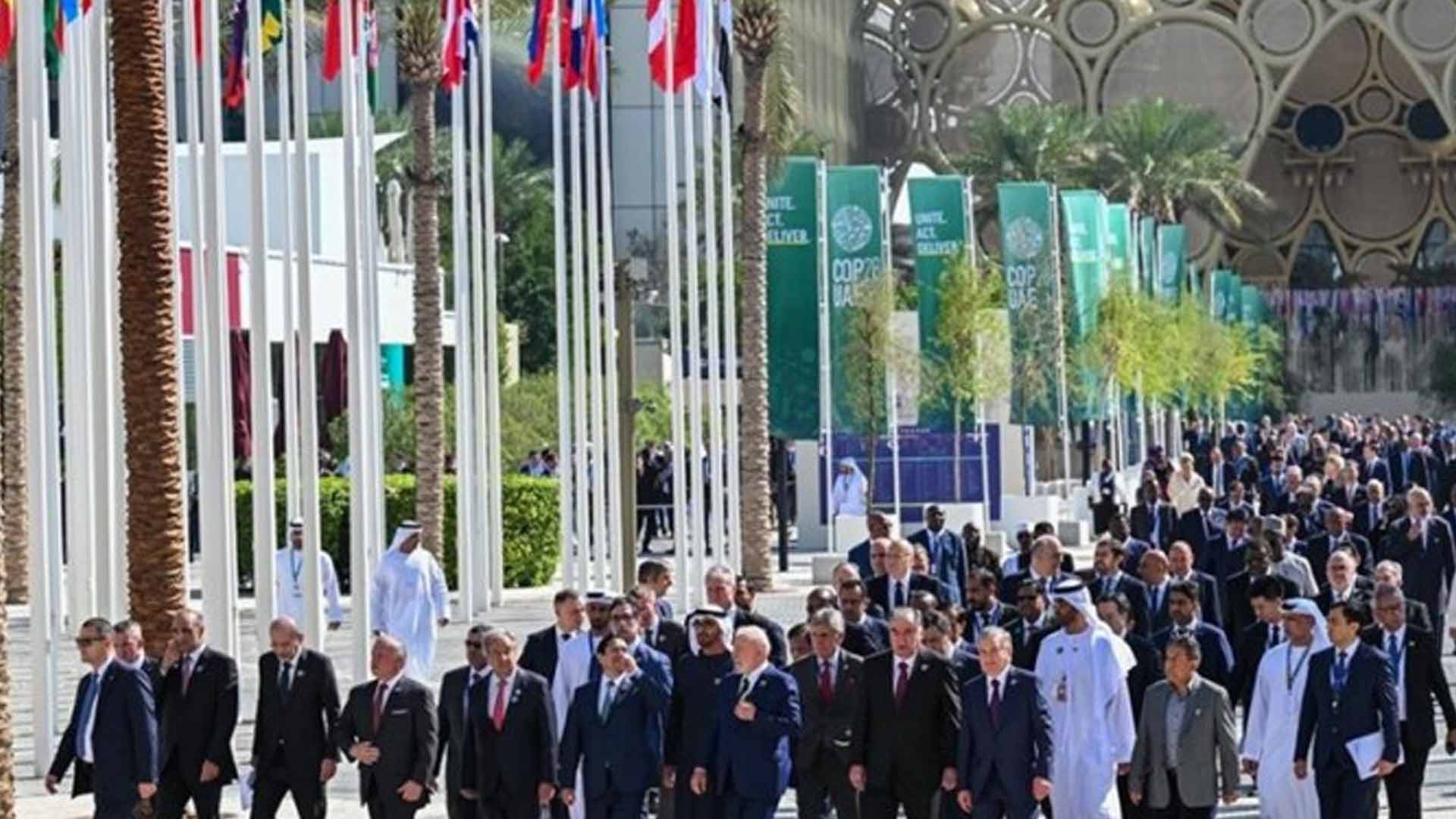







A total of 118 countries pledged Saturday to triple global renewable energy capacity by 2030 and double the progress in energy efficiency at the 28th Conference of the Parties (COP28) to the UN Framework Convention on Climate Change in the United Arab Emirates (UAE).
As part of the initiative announced during COP28 in Dubai, the Global Acceleration for Decarbonization initiative was unveiled.
Among the countries that signed the commitment are the UAE, the United States, Brazil, Japan, the United Kingdom, Mexico, Poland, Germany, Australia, Canada, Denmark, France, Kenya, the Netherlands, Nigeria and Spain.
But Türkiye, China, India and South Africa have not yet signed.
Tripling global renewable energy capacity means increasing it from the current 3.4 terawatts in 2022 to 11 terawatts by 2030.
The two targets are among five key steps announced by the International Energy Agency for the success of the UN summit.
Additionally, within the initiative, 50 companies representing more than 40 percent of global oil production signed the Oil and Gas Decarbonization Covenant (OGDC).
As part of the initiative, a commitment was made to provide $1 billion in financing for methane emission reduction projects.
COP28 President Ahmed Al Jaber urged more countries to sign the commitment to triple global renewable energy capacity and double the progress in energy efficiency during the meeting where he announced the initiative.
Describing the launch of OGDC as a “great step,” Al Jaber said: “While many national oil companies have adopted net-zero emission targets for the first time for 2050, I know that they and others can do more.”
“The entire sector needs to set stronger targets for achieving a 1.5-degree global temperature increase,” he added.
Head of Policy and Projects of the Global Wind Energy Council, Joyce Lee, said the consensus reflects the belief that tripling global renewable energy capacity by 2030 is the “most effective lever” in the fight against climate change.
Lee underscored the need to combine the increase in renewable energy capacity with the gradual phasing out of fossil fuels.
She said what is crucial now is for countries to urgently translate the target into policy, regulation and investment action. (PNA)


