



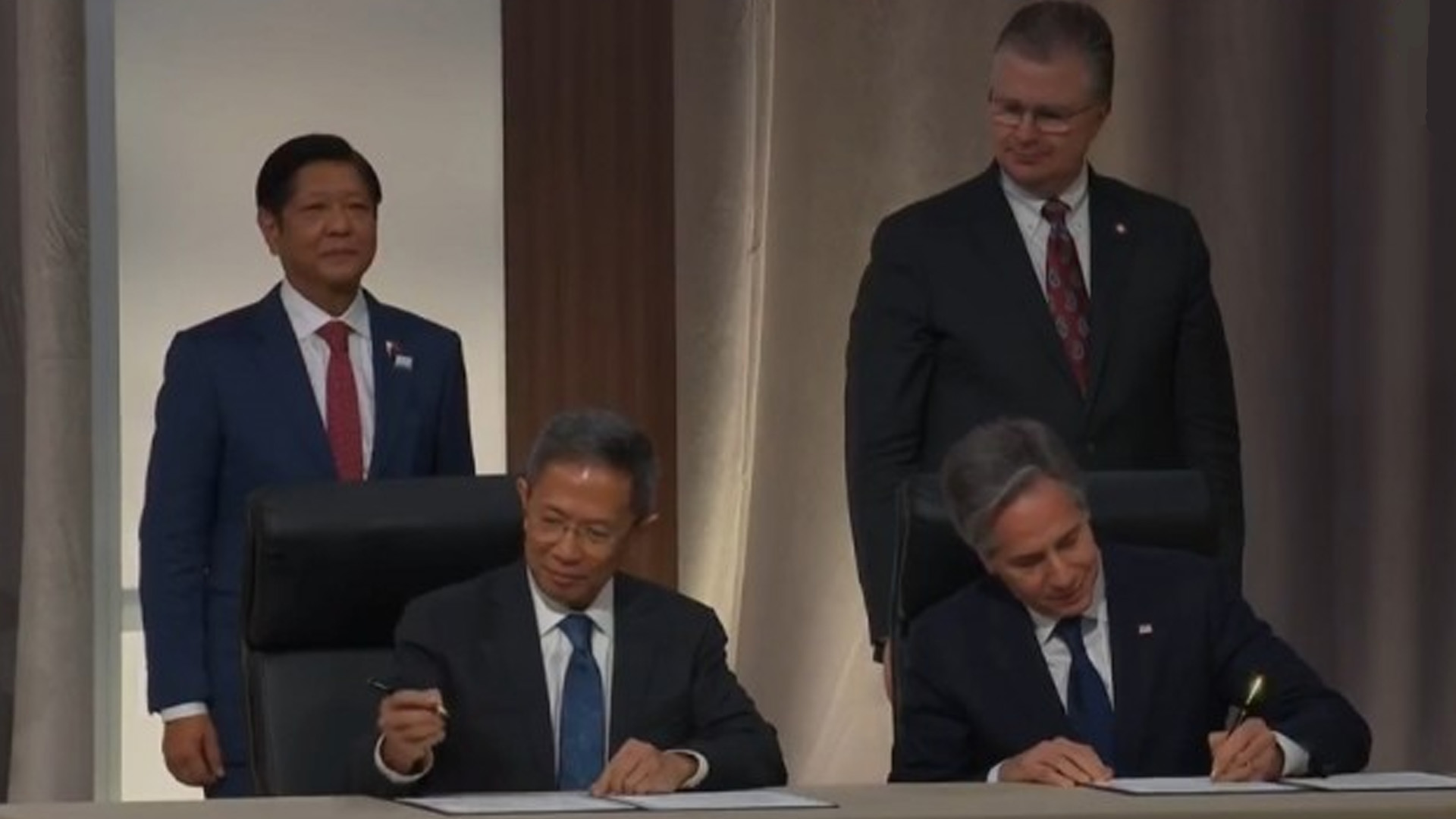







The Philippines and the United States signed Friday (Manila time) the civil nuclear cooperation deal, or the 123 Agreement, which will allow the transfer of US-origin nuclear technology to the Philippines.
Department of Energy (DOE) Secretary Raphael Lotilla and US Secretary of State Antony Blinken signed the landmark 123 Agreement in San Francisco, California on the sidelines of the Asia Pacific Economic Partnership (APEC) Summit.
The signing was witnessed by President Ferdinand R. Marcos Jr. and US Assistant Secretary of State for East Asian and Pacific Affairs Daniel Kritenbrink.
“Under the leadership of President Ferdinand Marcos Jr., the negotiation of the present agreement with the US was made possible,” Lotilla said in his remarks.
“Every step of the way, the agreement recognizes adherence to standards set by the International Atomic Energy Agency.”
In a statement, the DOE said the deal “will allow the transfer of information, nuclear material, equipment, and components directly between the Philippines and the US or through persons authorized by their respective authorities to engage in transfer activities.”
It also provides the legal framework for potential nuclear power projects with US providers.
“Beyond nuclear power applications to combat climate change, the new agreement facilitates bilateral cooperation in a wide array of peaceful uses of atomic energy — all supportive of various Sustainable Development Goals, including plant breeding, livestock production, insect pest control, soil and crop management, water use efficiency, plastic waste disposal, food safety, health and medicine,” Lotilla added.
Blinken said the negotiations with the Philippines for the 123 Agreement is the fastest of its kind, finalized in less than a year since US Vice President Kamala Harris launched the initiative in her visit to Manila in November 2022.
“President Marcos has set an ambitious goal, cutting the Philippines greenhouse as emissions by 75 percent by 2030, and increasing the production of clean energy so that 50 percent comes from renewables sources by 2040,” Blinken said.
“The United States is committed with the Philippines so that it can meet those targets,” he added.
The US Department of State leads negotiations of 123 Agreements.
After the US President approves the agreement, it is submitted to Congress for review.
Section 123 of the Atomic Energy Act of 1954 requires US partners to meet specified criteria, including peaceful uses; adherence to International Atomic Energy Agency safeguards; physical security of nuclear materials; and prohibitions on enriching, reprocessing, and transfer of specific material and equipment without US consent, according to the US State department. (PNA)


