



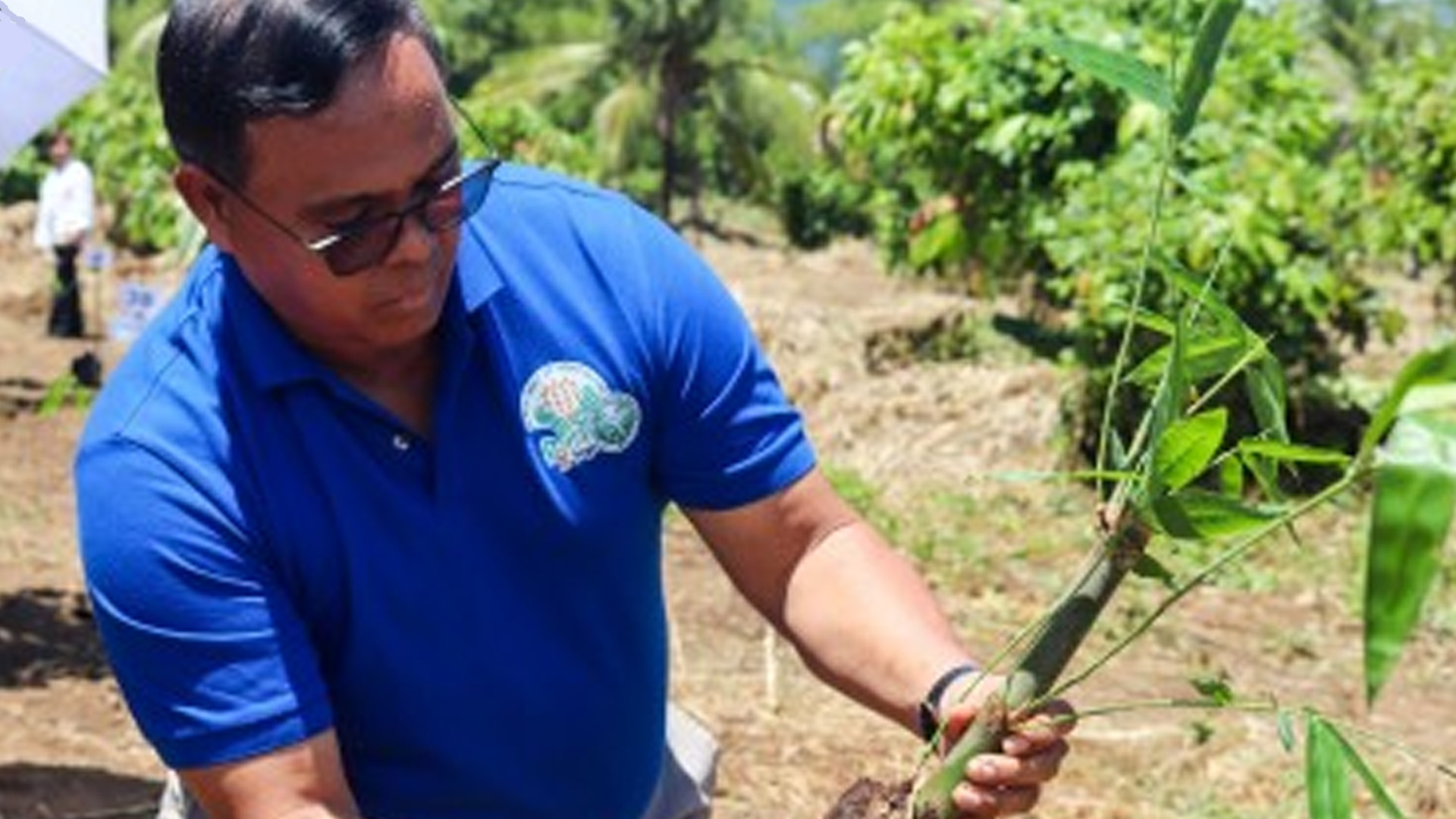







The Department of Agriculture (DA) regional office here is stepping up its advocacy for the planting of bamboo to mitigate the impacts of climate change, as the country celebrates Philippine Bamboo Month this September.
DA Eastern Visayas regional executive director Andrew Rodolfo Orais said planting bamboo has been included in their regular program of activities to raise public awareness of the benefits of bamboo.
“If we check some literature, bamboo has a big help to climate change. Bamboo can also be used as biomass which can be made as charcoal and can be used for biofuel. It can also be used for soil restoration,” Orais said in a video message released on Wednesday.
At the same time, there are a lot of products that can be made out of bamboo, he added.
Orais also encouraged DA employees to continue planting bamboo even at their farms or idle spaces at home.
“There are a lot of benefits that we can get from bamboo, that even our local leaders are promoting. It is important we take note of this day as we started planting bamboo,” he said.
Orais also led the planting of 50 bamboo seedlings of iron and giant variants at the DA’s Babatngon Experiment Station in Babatngon, Leyte.
The Department of Science and Technology-Forest Products Research and Development Institute (DOST-FPRDI) said bamboo is one of the most economically important non-timber forest products in the Philippines.
Its fast growth and excellent properties make it an ideal substitute for wood for furniture, handicrafts, construction material and chemical products.
The global market for bamboo in 2006 stood at about USD7 billion and was projected to increase to USD17 billion from 2015 to 2020, according to DOST-FPRDI.
September of every year is celebrated as “Philippine Bamboo Month” based on Proclamation No. 1401 signed by then President Rodrigo Duterte on June 27, 2022.
In Central Visayas, around 100 participants from the region converged in Dumaguete City for the Bamboo Congress and Investment Forum on Wednesday.
The activity, spearheaded by the Department of Trade and Industry (DTI), provides an array of business opportunities for micro, small and medium entrepreneurs from Cebu, Bohol, Negros Oriental and Siquijor who want to engage in bamboo industry.
DTI-Negros Oriental spokesperson Jade Krystle Bato said the bamboo congress is a convergence of stakeholders from both public and private sectors to discuss the current state of bamboo in the country.
Discussed during the morning sessions were new and developing products made of bamboo, advocacies, implantation in relation to bamboo development at the local government units, Bato said.
The DTI targets MSMEs to engage in the bamboo business by providing them skills training and feasible investment opportunities.
The congress also aims to present the whole value chain of bamboo and not just by-products like furniture.
Bato said bamboo is picking up again owing to the trend in promoting green and sustainable activities.
Bamboo has plenty of benefits, from growing nurseries to providing food through its shoots, musical instruments, kitchen utensils, furniture and other items, and as a structural material. (PNA)


