

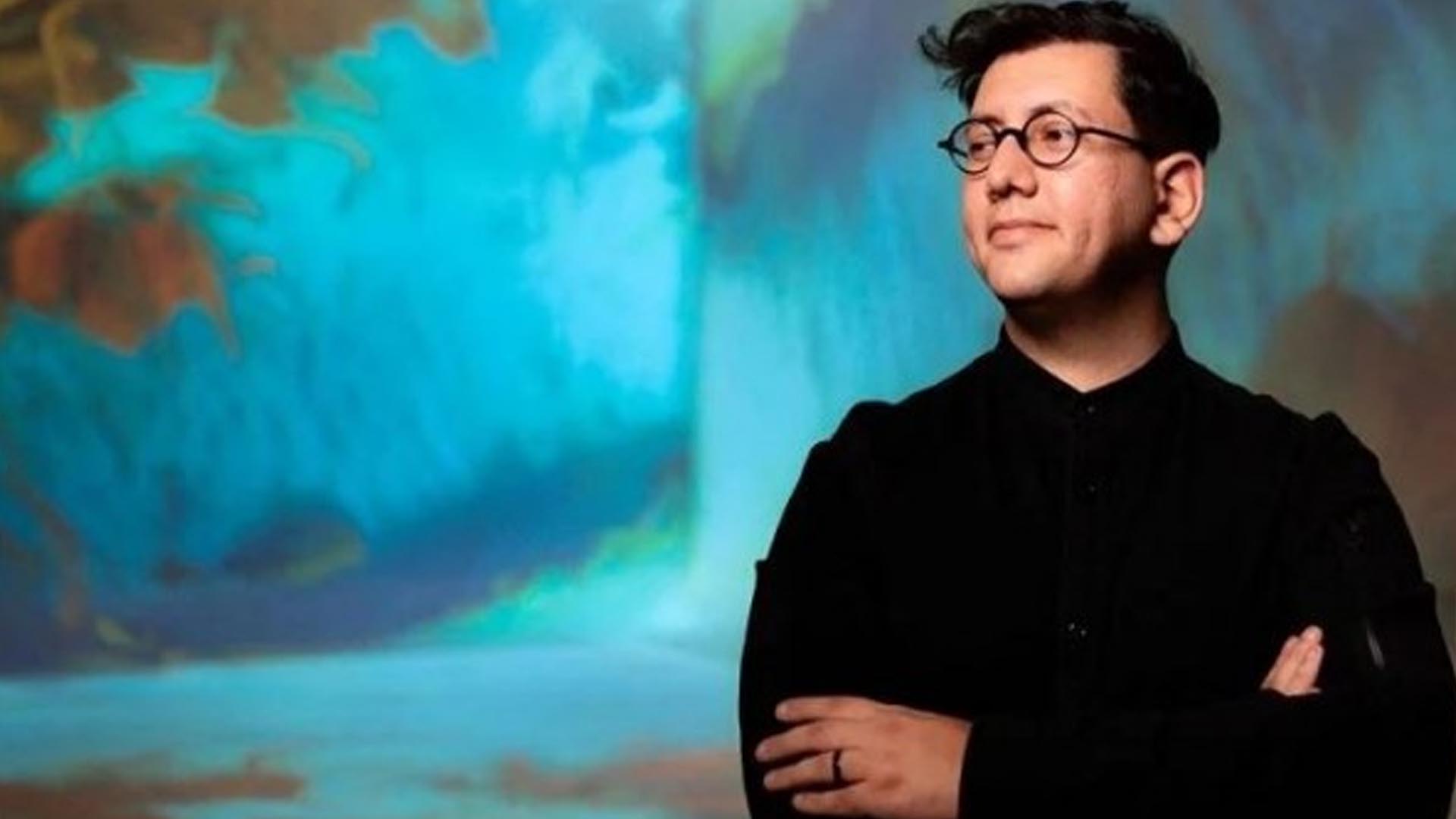






As concerns over potential risks posed by artificial intelligence (AI) continue to mount, a prominent data artist has offered a refreshing perspective by saying that machines “will not replace human creativity.”
“As a concept, it gives us a lot to ponder in terms of how we define creativity and measure creative time or effort in the age of AI,” Refik Anadol, a Turkish-born digital media artist, told Anadolu.
“As a tool, even though it might have useful professional applications, it won’t replace human creativity because, in my opinion, human creativity requires a strong connection between memory and emotion – something that generative AI will always lack,” he explained.
“I think that recent advancements in AI technologies might initially be seen as serious threats in the art world, but I don’t think that generative AI specifically poses dangers for the future of creativity,” he added.
Based in the Turkish metropolis Istanbul as well as Los Angeles, Anadol is known for his use of cutting-edge technologies to produce immersive installations and sculptures. These technologies include artificial intelligence, machine learning, and quantum computing.
On May 5, Anadol recreated his audio/visual performance Living Architecture: Casa Batllo in Barcelona, Spain to honor Antoni Gaudi, the wildly inventive Catalan architect who died in 1926.
More than 65,000 people experienced the performance in Barcelona, where the Caso Batllo is situated. Last year, a dynamic NFT of Gaudi’s iconic Casa Batllo was auctioned off by Christie’s in New York for USD1.38 million.
Anadol’s newly commissioned installation Infinity Room: Bosphorus, a site-specific installation, is informed by real-time environmental data from the Istanbul Strait, and can also be visited at the Istanbul Modern Museum.
AI ‘opportunity to find new ways to collaborate with machines’
Asked about an open letter signed by tech luminaries such as Tesla CEO Elon Musk and Apple co-founder Steve Wozniak calling for a six-month pause on AI research, warning of the new technology’s “profound risks to society and humanity,” Anadol acknowledged the potential dangers.
“I agree with the opinion expressed in the letter that the pace of AI-related policy-making should match the speed of innovation in the field, but I am of the opinion that instead of pausing AI research we can perhaps work on strengthening policies, regulations, and ethics around it simultaneously,” he said.
Last week, US Vice President Kamala Harris met with CEOs of tech companies working on AI “to discuss the responsibility that governments and companies have to mitigate risks to protect the public.”
“Advances in tech always present new opportunities and challenges. Generative AI is no different,” Harris wrote on Twitter.
The 38-year-old Anadol said he believes that when generative AI technologies expand and are widely used, artists will struggle to push the boundaries of human imagination even further.
“I think that the rise and the prevalent use of generative AI tools pose challenges for artists to push the boundaries of human imagination even more,” he said. “And I say that not because we, as humans, need to compete with machine creativity; on the contrary, I see this moment as an opportunity to find new ways to collaborate with machines to realize our boldest, the most groundbreaking, and the most futuristic artistic ideas.”
As artificial intelligence is set to fundamentally reshape our world, art lovers are getting ready to see AI’s impact on both creativity and, even more deeply, human adventure. (PNA)


