

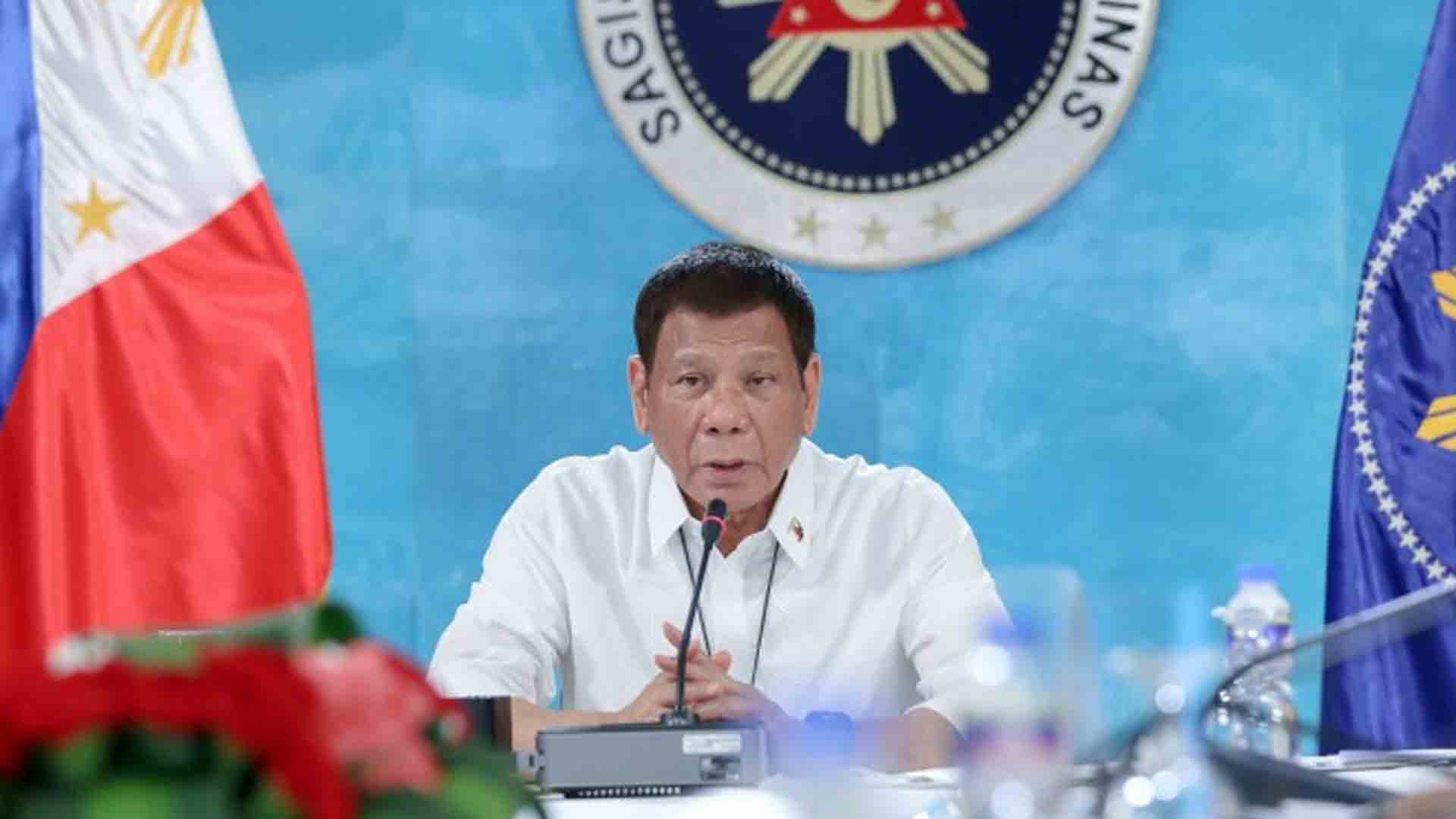






Aside from upholding fairness and transparency, President Rodrigo Duterte on Monday urged media practitioners to also make a positive impact on people’s lives.
On the observance of World Press Freedom Day, Duterte vowed to protect press freedom, recognizing it as a “vital component” and “indicator of progress” anywhere in the world.
“I join the Filipino people and international community in the annual observance of the World Press Freedom Day. This year’s celebration affirms the Philippines’ commitment to protect press freedom as a public good and as an indispensable requirement with vibrant democracy,” he said in a pre-recorded speech aired over PTV-4.
Duterte emphasized the importance of “making a positive impact” especially now that traditional media has changed in the digital age.
“Cognizant of the ever-changing communication system these days, may the mass media also uphold fairness and transparency while also making a positive impact on the people’s lives,” he added.
In a separate statement, Duterte said the occasion serves as a reminder of “the vital role of a free and responsible press in the advancement of society.”
“In this digital age where information is created and shared rapidly, the work of both traditional and emerging media requires a stronger commitment in upholding truth and accuracy,” he said.
Duterte said the theme of the occasion this year, “Information as a Public Good”, affirms the nature of news and information as a “public good that must be utilized effectively to achieve their intended benefits.”
He also stressed the importance of protecting the press “from all forms of threat and intimidation” so that they may fully serve the best interest of our people.
“Let us continue to use the power of communication for our collective efforts in nation-building and ensure the integrity and safety of the press. Together, let us nurture a better-informed citizenry and realize a brighter future for everyone,” he said.
In July 2016, Duterte signed Executive Order 2 on Freedom of Information (FOI) requiring disclosure of all government records involving public interest and upholds the constitutional right of people to information on matters of public concern.
He formed the Presidential Task Force on Media Security (PTFoMS) through Administrative Order 1 in October 2016 to ensure the safety of media workers and address the distinction attached to the Philippines as one of the most dangerous places in the world for journalists.
Duterte also signed Republic Act (RA) 11458 in September 2019 to expand the coverage of a law protecting journalists, including broadcast and online journalists, from revealing confidential sources.
May 3 was proclaimed World Press Freedom Day by the United Nations (UN) General Assembly in 1993 following a recommendation adopted at the 26th session of the United Nations Educational, Scientific and Cultural Organization’s (UNESCO) General Conference in 1991.
According to UNESCO, the occasion celebrates “the fundamental principles of press freedom; to evaluate press freedom around the world, to defend the media from attacks on their independence and to pay tribute to journalists who have lost their lives in the exercise of their profession.” (PNA)


