



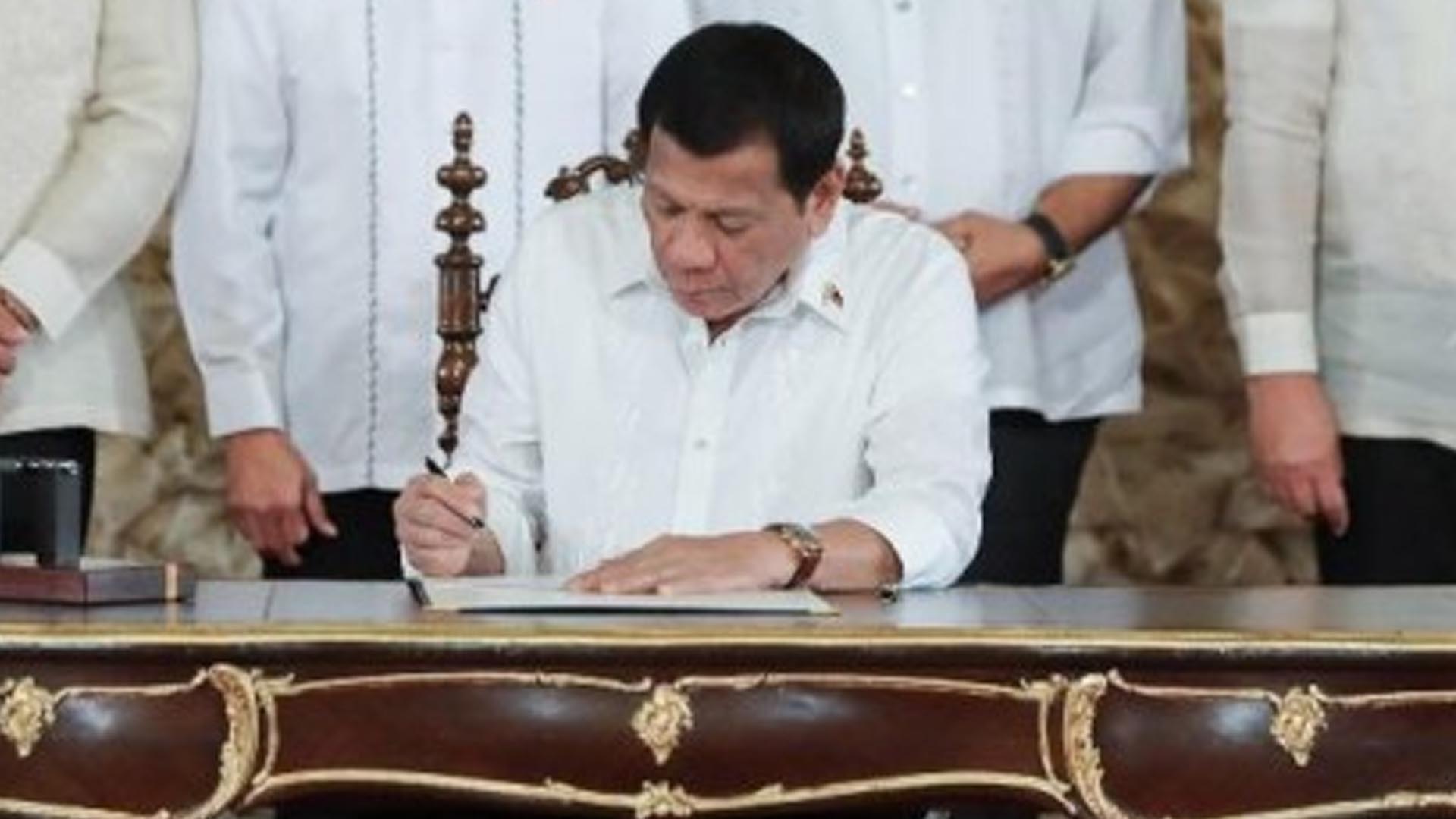






President Rodrigo Duterte has signed an executive order institutionalizing the government’s diversity and inclusion program to advance and protect the rights and welfare of all Filipinos.
Under Executive Order 100 Duterte signed on Dec. 17, a Diversity and Inclusion Program (DIP) was formed to serve as national program “which shall consolidate efforts and implement existing laws, rules, and issuances against the discrimination of persons”.
Recognizing the policy of diversion and inclusion, the order also aims to “cultivate a supportive, collaborative, and inclusive environment to maintain equal opportunities and to recognize the diverse and empowered thoughts and perspectives of all persons.”
“The State values the dignity of every human person and guarantees full respect for human rights,” the order read.
“To this end, taking into account that the equal protection of laws does not bar reasonable classification based on substantial distinctions, the State shall endeavor to advance and protect the rights and welfare of all Filipinos, regardless of age, disability, national or ethnic origin, language, religious affiliation or believe, political affiliation or belief, health status, physical features, or sexual orientation and gender identity and expression,” it added.
The DIP will provide a framework for agencies to identify and eliminate all barriers to equal opportunities in education and the recruitment, hiring, training, promotion, and retention of personnel.
It will include programs to ensure that all personnel are properly equipped with the ability to manage diversity, including the provision of robust orientation processes and relevant trainings.
The program will also outline mechanisms for accountability in departments, bureaus, offices, agencies, state universities, and colleges (SUCs), government-owned or controlled corporations (GOCCs) and local government units (LGUs) and provide a process for seeking redress for discrimination-related complaints and a forum for other related concerns.
The order also creates an Inter-Agency Committee on Diversity and Inclusion (ICDI) to develop the DIP in consultation with the Commission on Human Rights, Civil Service Commission, stakeholders, advocacy groups, and non-government organizations.
The committee will also be tasked to provide overall direction to the DIP and guidance and technical assistance to agencies in the implementation of the DIP in their respective agencies.
It will provide capacity-building interventions and information campaigns for the effective implementation of the DIP and encourage local government units (LGUs) to issue ordinances promoting diversity and inclusion within their respective jurisdictions among other powers and functions.
The panel will be chaired by the Interior Secretary while the Social Welfare Secretary will serve as vice-chair.
Members of the committee will be representatives from the Departments of Budget and Management, Labor and Employment, Justice, Education, Health, Philippine Commission on Women, Commission on Higher Education, Presidential Commission for the Urban Poor, National Commission on Indigenous Peoples; National Council on Disability Affairs; and the National Youth Commission.
Funding for the order’s initial implementation will be identified by the DBM and if warranted, from the allocation for Gender and Development in the respective budgets of concerned agencies. (PNA)


