



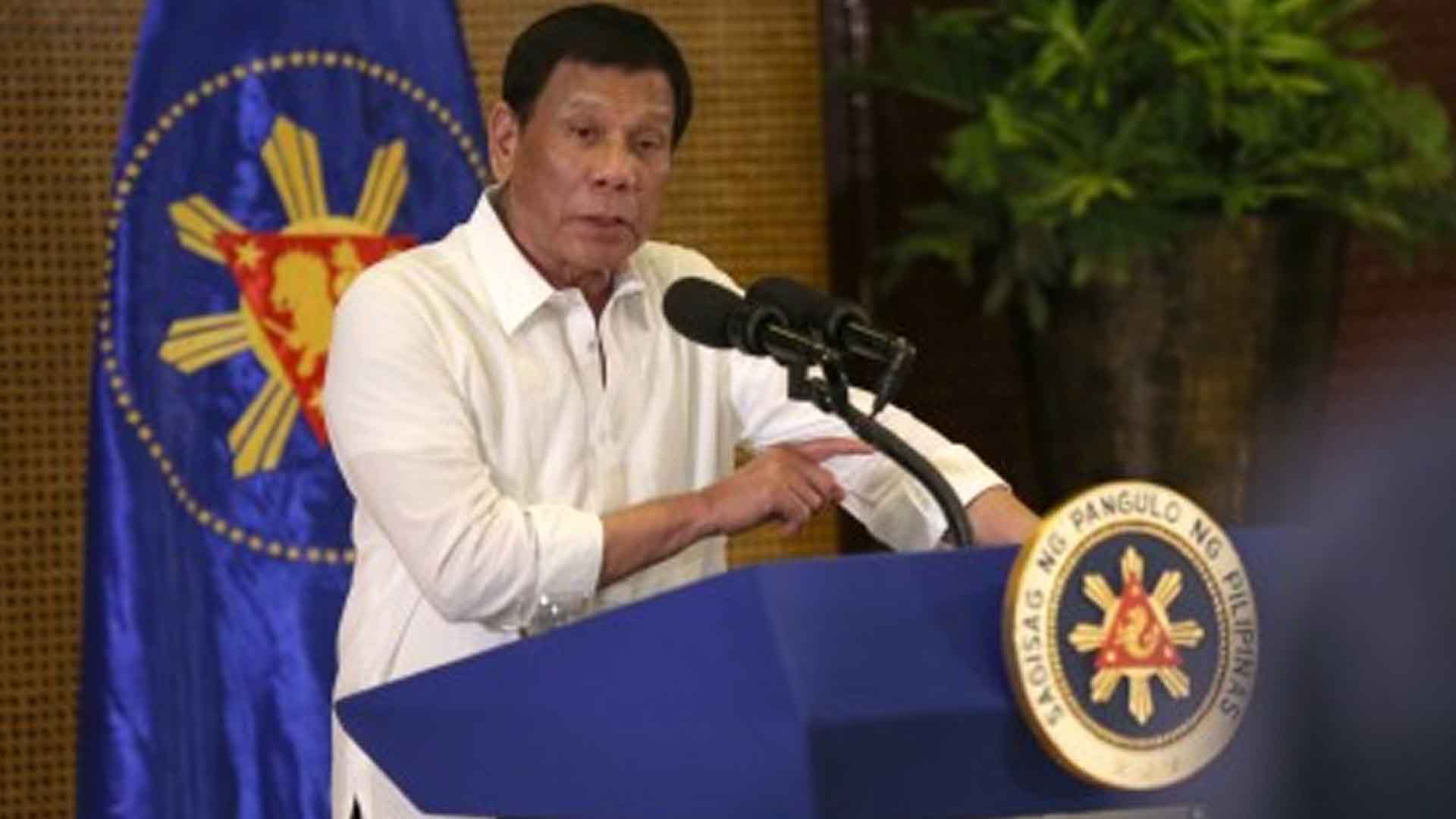






President Rodrigo Duterte has signed an executive order reorganizing the National Cybersecurity Inter-Agency Committee (NCIAC).
Under Executive Order No. 95 signed by Duterte on Nov. 15, the Department of Information and Communications Technology (DICT) Secretary was designated as co-chair of NCIAC, replacing the Department of Science and Technology (DOST) Secretary.
The DICT Secretary will co-chair the NCIAC with National Security Council (NSC) Director General while DOST Secretary was relegated as one of the members of the inter-agency body.
The NCIAC will be chaired by the Executive Secretary, the EO read.
Other members of the Committee are Secretaries of Energy (DOE), Finance (DOF), Foreign Affairs (DFA), Interior and Local Government (DILG), Justice (DOJ), National Defense (DND), Transportation (DOTr), and Presidential Communications Operations Office (PCOO).
Also members are the Commissioner of the National Telecommunications Commission (NTC), Chairman of the National Privacy Commission (NPC), Executive Director of the Anti-Terrorism Council (ATC), Executive Director of the Cybercrime Investigation and Coordinating Center (CICC), and Governor of the Bangko Sentral ng Pilipinas (BSP).
Former President Benigno Aquino III signed Republic Act No. 10844 that created the DICT in May 2016, eight months after the NCIAC was established through EO No. 189.
The new EO also renamed the defunct Department of Transportation and Communications (DOTC) to Department of Transportation.
It pointed out that it is the state’s policy to “ensure universal access to quality, affordable, reliable and secure ICT services.”
The NCIAC is mandated to assess the vulnerabilities and risks of the country’s cybersecurity, issue updated security protocols to all government employees, for the proper handling, distribution, and storage of all forms of documents, and communication.
It is also tasked to enhance the public-private partnership to deter cyberattacks, minimize cyber risks, and increase cyber resiliency. (PNA)


