



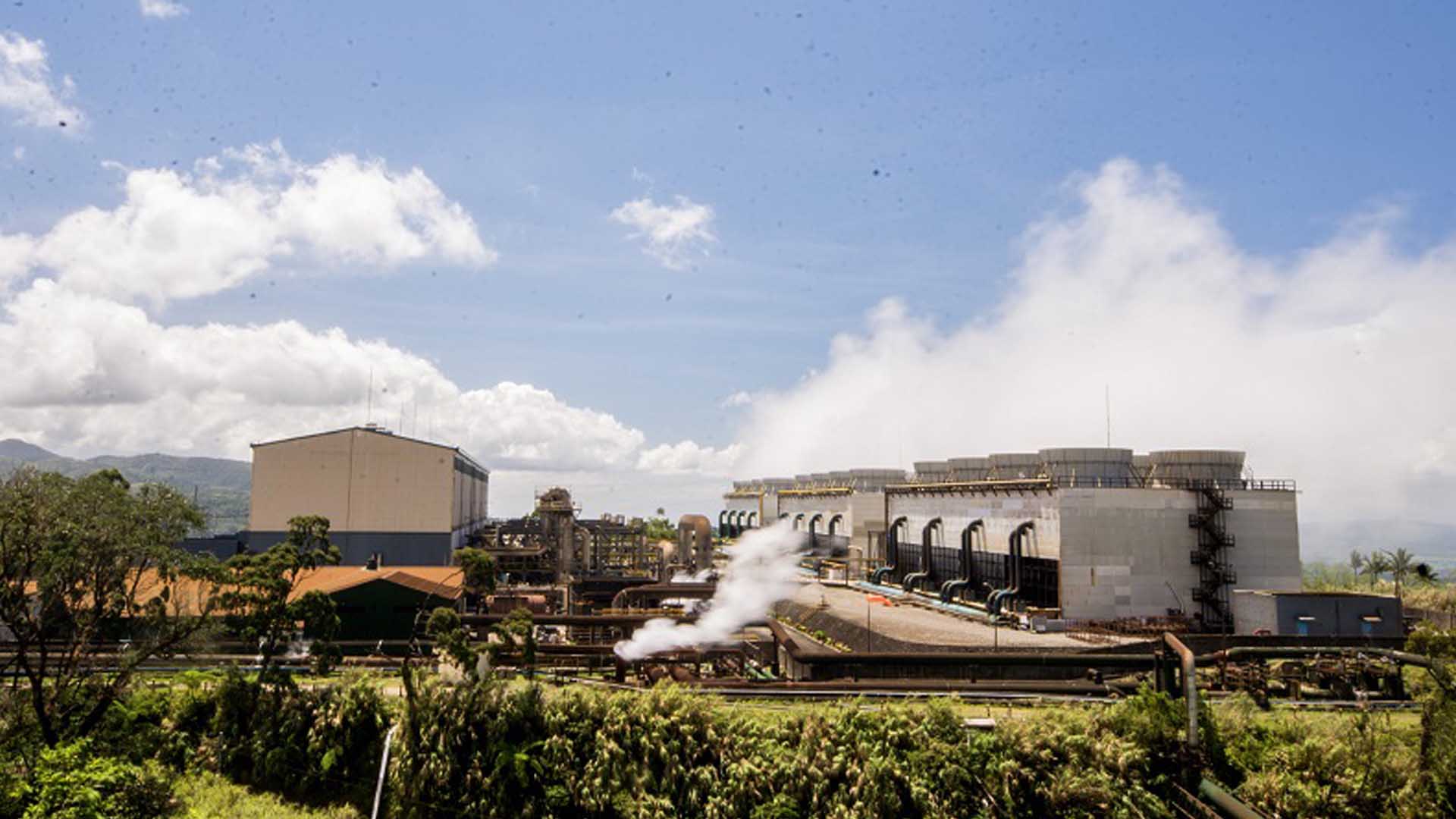






As the Philippines continues to move toward attaining energy security amid worsening climate-related challenges, the islands of Negros & Leyte are making the case for communities fully powered by renewable energy.
The abundance of renewable energy sources in both islands give them the edge over other parts of the country. Key to meeting this goal is the installed geothermal capacity of Energy Development Corporation’s (EDC) Negros and Leyte facilities.
For almost 40 years, EDC has been powering the islands with what is considered the “holy grail” of renewable energy sources. “Since geothermal energy can provide continuous power 24 hours a day, it serves as the best source of baseload power,” said Marvin Kenneth S. Bailon, head of EDC’s Business Development–Market Planning & Contracts. To date, EDC has a geothermal capacity of 1,181 megawatts (MW) or 60 percent of the country’s total geothermal output.

“Studies have repeatedly pointed out that the Philippines is the 3rd most vulnerable country to climate-related hazards and we need to take bold action to reverse that. One decisive step we can take is to transform our energy sector and the islands of Negros and Leyte show that it is possible and now even a reality,” added Bailon.
Most importantly, apart from being more eco-friendly, electricity generated from geothermal sources are helping consumers enjoy more competitively priced power rates, according to Bailon.
The Philippines is currently the world’s third largest producer of geothermal energy after the United States of America and Indonesia, mostly because of EDC, which accounts for 61% of the country’s current installed capacity.
EDC’s 711.4-MW Leyte Geothermal Project (LGP) is home to its largest geothermal facility and has the biggest wet steam field in the world. The facility supplies power to Leyte-II Electric Cooperative (LEYECO II) and Leyte-III Electric Cooperative (LEYECO III) in the province of Leyte and several other electric cooperatives in the Visayas region.
On the other hand, EDC’s Southern Negros Geothermal Project (SNGP) supplies 2MW to Negros Oriental I Electric Cooperative, 25MW to Negros Oriental II Electric Cooperative, 20MW to Central Negros Electric Cooperative and 3MW to Northern Negros Electric Cooperative. These comprise around 16 percent of the island’s power supply out of its peak demand of 312MW.
“With the examples set by the provinces of Negros and Leyte, we are optimistic that a greener energy future lies in store for the entire country,” Bailon concluded.


