



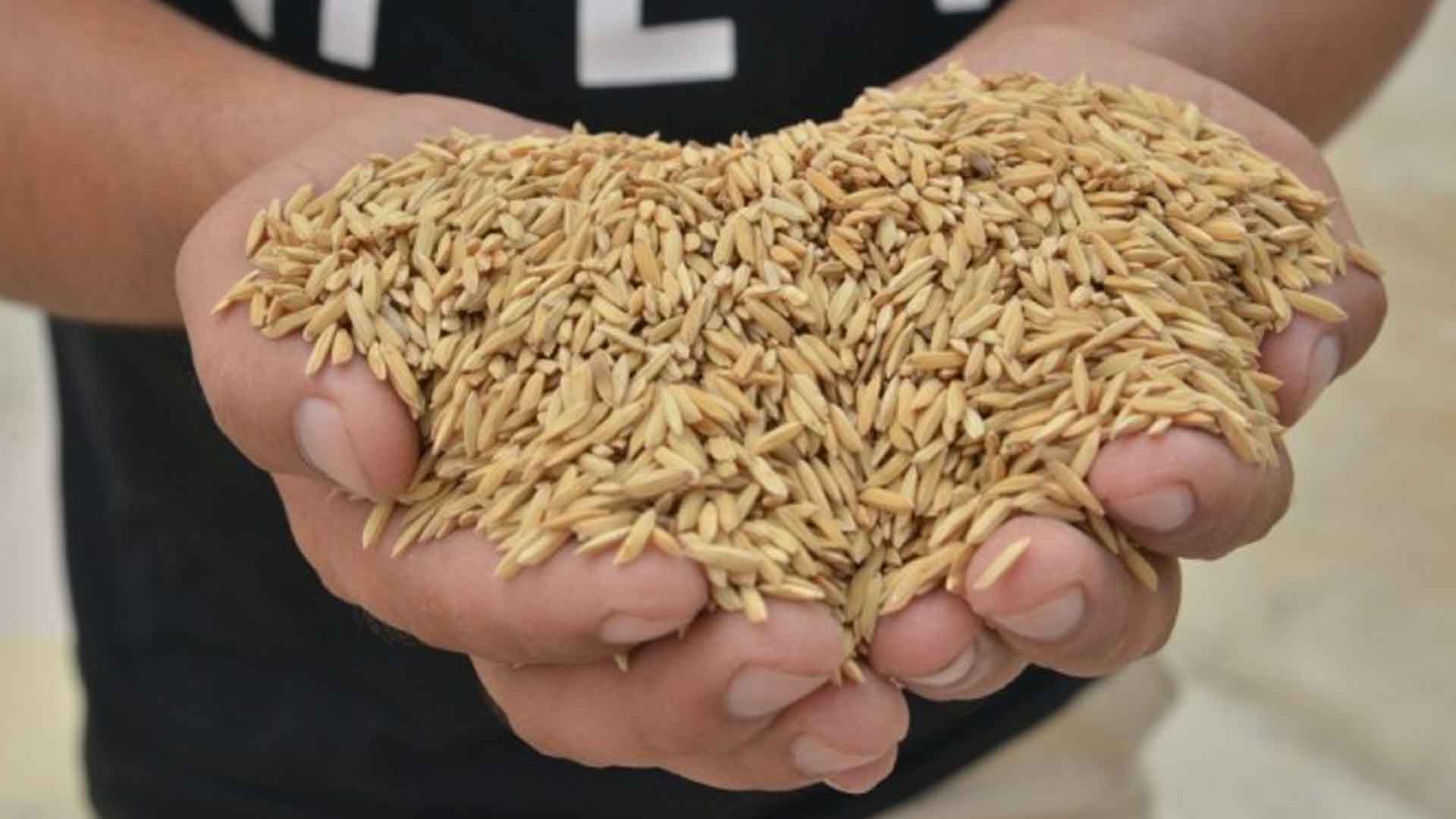






The National Seed Industry Council (NSIC) has approved 15 new inbred rice varieties for commercial release.
Eight of these varieties were developed by the Philippine Rice Research Institute (PhilRice). Three of them are intended for irrigated lowland (NSIC Rc 622, Rc 624, and Rc 626) and five are for special purpose pigmented non-glutinous (NSIC Rc 638 SR, Rc 640 SR, Rc 642 SR, Rc 644 SR, and Rc 646 SR).
On the other hand, the seven other approved rice varieties were bred by the International Rice Research Institute (IRRI). Five of them are for irrigated lowland (NSIC Rc 628, Rc 630, Rc 632, Rc 634, and Rc 636), one is zinc-biofortified (Rc 648), and one is for rainfed lowland (Rc 650).
Dr. Oliver E. Manangkil, the senior plant breeder of the Department of Agriculture (DA)-PhilRice, said in a social media post on Monday that with these new rice varieties, farmers have more options as to which is suited to their farm’s conditions.
He said the varieties will be introduced to farmers through techno-demo farms under the various extension programs of DA-PhilRice and its branch stations.
Manangkil said during the past years, they had also introduced several new rice varieties to farmers through their NextGen PLUS project.
The project, he added, is a collaborative effort between PhilRice, IRRI, University of the Philippines-Los Baños, and the DA Regional Field Offices under the Food Self Sufficiency Program of the DA National Rice Program, and funded by the DA-Bureau of Agricultural Research.
Under the project, multi-location trials were done in all major irrigated and rainfed rice-growing regions under the supervision of DA-regional field offices, and state colleges and universities across the country.
Adaptation trials were set up in farmer-partners’ fields.
“Thru NextGen, we were able to introduce newly-released varieties to farmers even in far-flung areas. We did participatory performance trials and validation, whereby farmers planted varieties and were given the chance to choose the best rice adapted to their local conditions,” Manangkil said. (PNA)


