



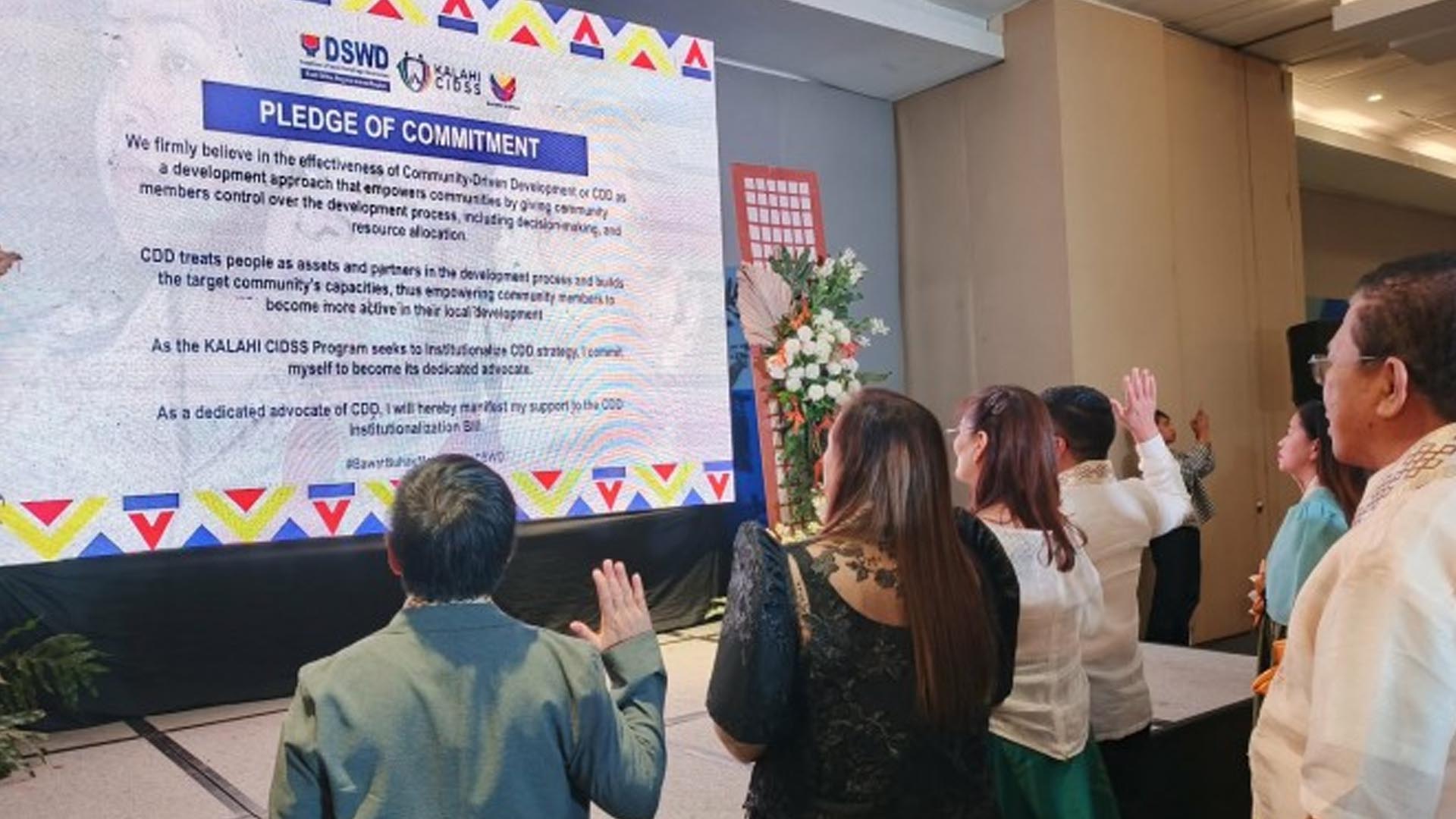






Fourteen municipalities in Negros Island Region (NIR) have been allocated a total of PHP760 million in indicative grants for the implementation of a three-year resilience plan under the Panahon ng Pagkilos: Philippine Community Resilience Program (PCRP).
The regional launch of Panahon ng Pagkilos, the successor project of the long-running Kapit-Bisig Laban sa Kahirapan-Comprehensive and Integrated Delivery of Social Services (KALAHI-CIDSS), was led by National Program Manager Bernadette Mapue-Joaquin and Department of Social Welfare and Development (DSWD-NIR) Regional Director Arwin Razo at SMX Convention Center here on Wednesday night.
Panahon ng Pagkilos: PCRP is a new community-driven development program designed to build climate-resilient communities.
In her keynote message, Mapue-Joaquin said the PCRP, along with the Kapangyarihan at Kaunlaran sa Barangay (KKB), reflects the collective resolve to build communities that are resilient, prepared, and adaptive, especially in the face of climate change and increasing disasters.
“To our beloved mayors, we seek your full support in upholding the guidelines and the processes that will strengthen disaster preparedness and resilience,” she added.
The first batch of seven grantees for 2026-2028 includes Basay and Jimalalud, with indicative grants of PHP70 million each, as well as Siaton, La Libertad, Vallehermoso, Santa Catalina and Tayasan, with PHP50 million each. All these municipalities are located in Negros Oriental.
The remaining seven grantees under the second batch, covering the period 2027-2029, are Don Salvador Benedicto, with PHP70 million, and Hinoba-an, Cauayan, and Calatrava, all in Negros Occidental, with PHP50 million each.
Each of Bindoy, Mabinay, and Pamplona in Negros Oriental also received PHP50 million indicative grants.
First to third class municipalities with a grant of PHP50 million will put up a PHP10 million local counterpart contribution (LCC) for a total sub-project funding of PHP60 million.
Fourth to sixth class municipalities with a PHP70-million grant are required to provide PHP14 million LCC for a total sub-project funding of PHP84 million.
The 14 municipalities in NIR are among the 500 municipalities across 49 provinces, selected to benefit from the PCRP, having high poverty incidence, heightened exposure to environmental hazards, and a significant indigenous population.
During the regional launching, those who signed the memorandum of agreements for the PCRP are local chief executives and representatives of Basay, Jimalalud, Vallehermoso, Tayasan, Santa Catalina, La Libertad, and Siaton, while those of Don Salvador Benedicto, Ayungon, and Zamboanguita signed for the KKB implementation.
While KALAHI-CIDSS focused on reducing poverty through community-driven development, Panahon ng Pagkilos builds on such a legacy with a broader approach to resilience, addressing socio-economic, life-cycle, and climatic risks.
Razo said that placing communities at the center assures that interventions are responsive, sustainable, and fosters ownership and accountability at the grassroots level.
“Our experience in implementing a community-driven development program affirms that development is most effective when it is rooted in the voices of the people. This is a huge opportunity to strengthen our shared commitment to inclusive growth and participatory governance,” he added. (PNA)


