



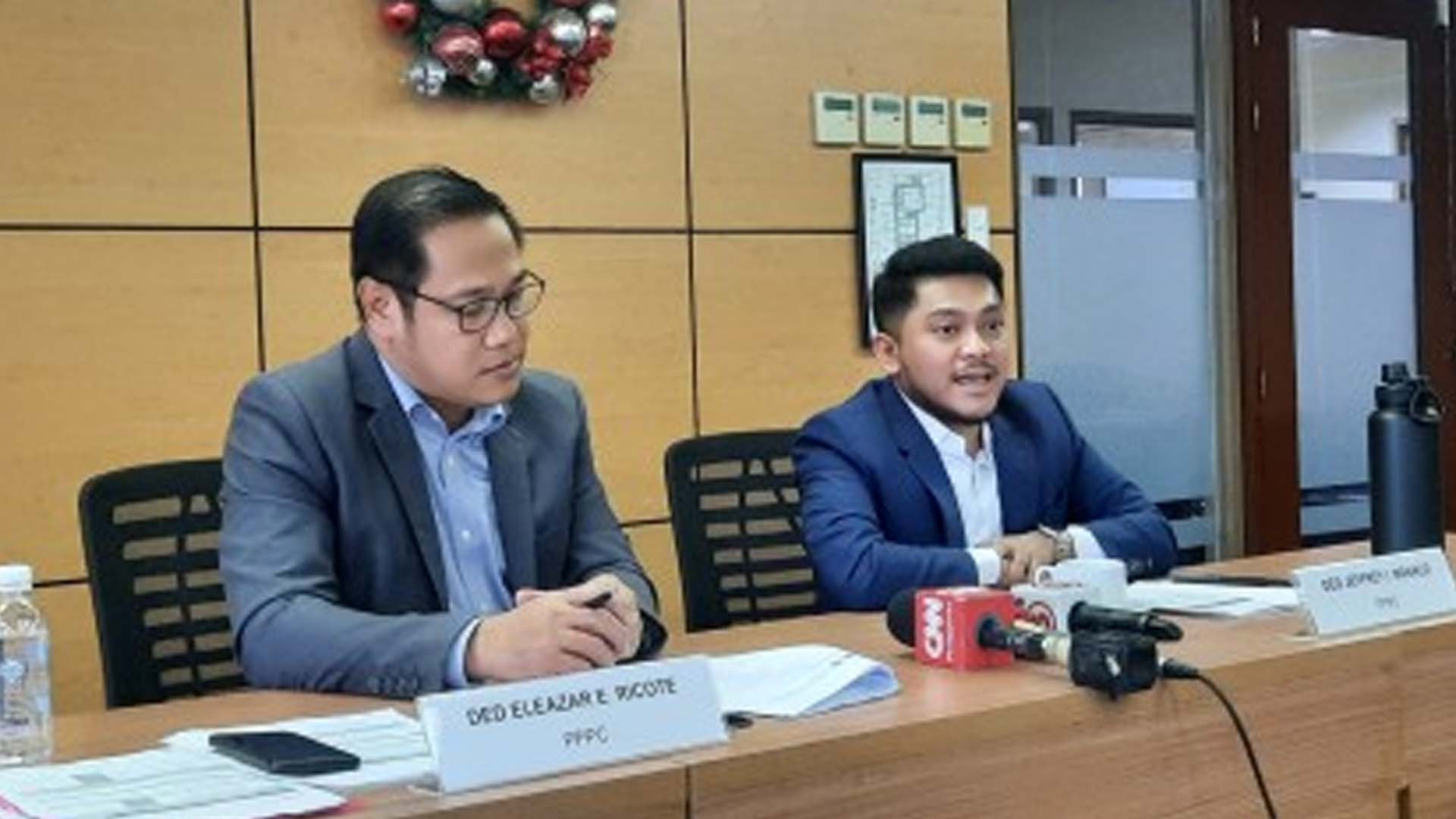







The Public-Private Partnership (PPP) Center has 109 projects in the pipeline for undertaking between the government and private sectors that can boost the Marcos administration’s Build Better More infrastructure program, its Deputy Executive Director Eleazar Ricote said.
In a press chat in Quezon City Friday, Ricote said estimated costs for these 109 projects will reach PHP2.4 trillion.
He noted that 97 of these projects are at the national level and the other 12 are for implementation by local government units (LGUs).
Projects in the pipeline are those that have been in various stages of procurement and with no signed contracts yet.
Ricote cited some of the PPP projects in the pipeline, which include the Bislig City Bulk Water Supply and Septage Project in Surigao del Sur, the Dialysis Center and Renal Facility of the Baguio General Hospital and Medical Center, and the operation and rehabilitation project of the Ninoy Aquino International Airport.
He also named three unsolicited projects– the Tarlac-Pangasinan-La Union Expressway Extension to San Juan, La Union; the PHP9.4 billion Univeristy of the Philippines-Philippine General Hospital Cancer Center; and the recently awarded Baggao Water Supply Project.
PPP Code
As President Ferdinand R. Marcos Jr. signed Republic Act 11966, or the PPP Code of the Philippines, early this month, PPP Center Deputy Executive Director Jeffrey Manalo said the new law will simplify and expedite the approval of projects.
This, as the PPP Code raised the threshold for project approval by the National Economic and Development Authority (NEDA) Board, which is chaired by Marcos, from PHP300 million to PHP15 billion.
“So, only those projects amounting to PHP15 billion and up will need the approval of the President through the NEDA Board. Everything else below PHP15 billion will be left to the head of the implementing agency or the Board—if GOCCs (government-owned and controlled corporations), for instance have their own boards, their approving body would be their boards. And these are usually interagency,” Manalo said, noting that this will apply to national projects.
However, there are still projects that would need the Investment Coordination Committee’s approval even if its project cost is below the threshold.
These include projects that will be needing availability payments, projects that will physical affect previous approved projects by the government, and those that will affect national master plans or sectoral development plans.
“For local projects, the framework is simple. Regardless of projects costs, LGUs may do their own PPPs subject to the approval of the local Sanggunian,” Manalo added.
Local projects that would need endorsement from the Regional Development Council are those that will affect national master plans and sectoral development plans, as well as those will be connected to a national asset, and those that would need financial undertaking that will bind the national government.
Manalo said out of the 109 projects in the pipeline, 22 projects breach the PHP15 billion threshold.
Meanwhile, PPP projects that are being implemented number to 181, with a total project cost of PHP2.6 trillion. Some 121 projects are at the national level and 60 are at the local level.
The implementing rules and regulations of the PPP Code is expected to be effective early second quarter of 2024, Manalo said. (PNA)


