








To mark the Philippines’ Zero Waste Month in January, the United States Agency for International Development (USAID)—through its Clean Cities, Blue Ocean (CCBO) program—and Nestlé Philippines, Inc. partnered to help local government units (LGUs) and community leaders better understand the link between climate change and solid waste management.
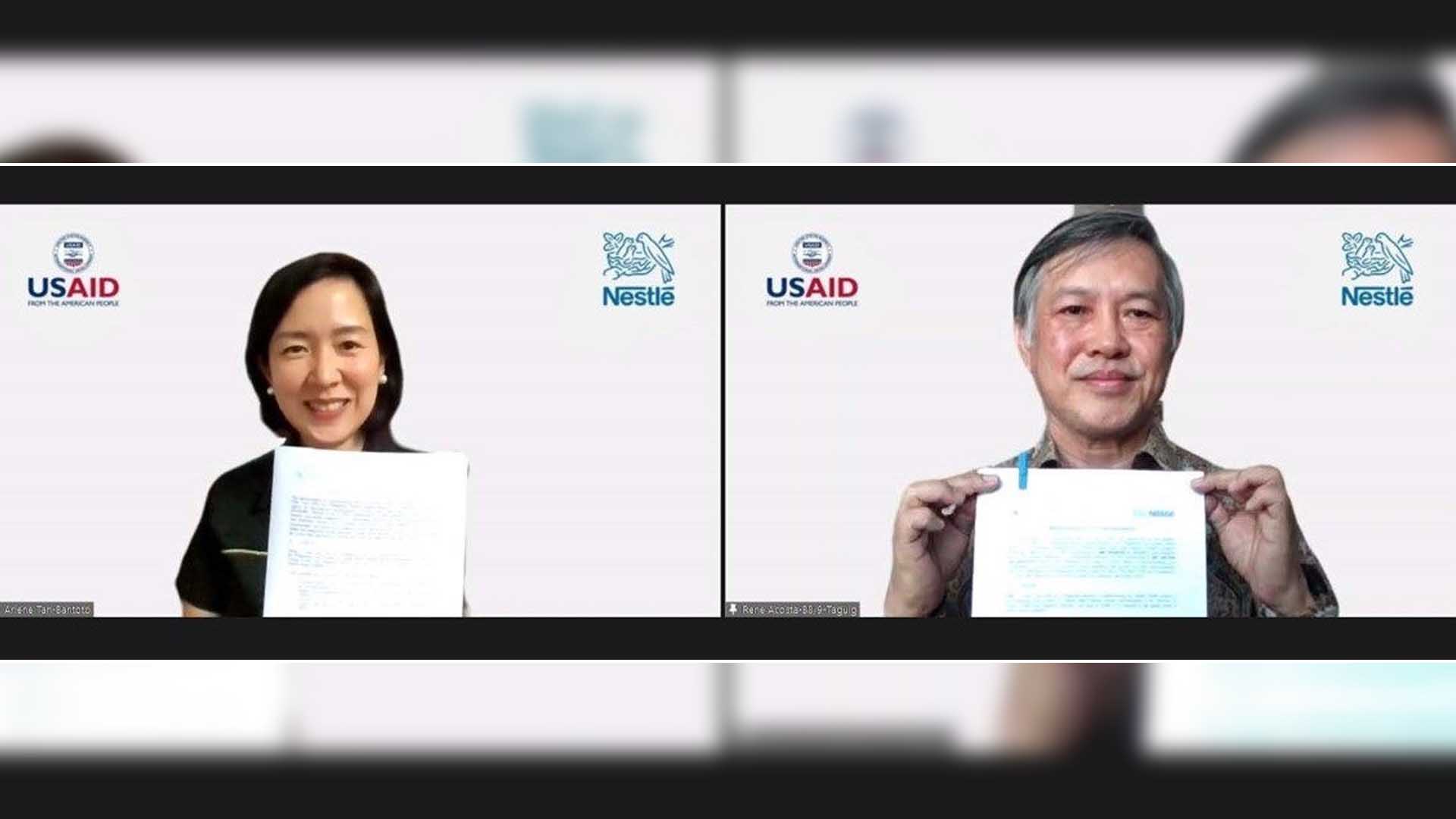
Tetra Tech’s Rene Acosta, CCBO Asia Regional Director, and Nestlé Philippines Senior Vice President Arlene Bantoto signed the memorandum of understanding on January 31.
Together, USAID and Nestlé Philippines committed to share practical tips about improving local solid waste management, increase communities’ access to solid waste management education, and implement Nestlé Philippines’ Climate Change and Solid Waste Management Education Program.
“Combatting ocean plastics pollution is a challenge that requires strong partnerships,” said USAID Philippines Mission Director Ryan Washburn. “USAID is pleased to partner with Nestlé Philippines in supporting local governments to reduce waste-linked contributions to ocean plastics and the climate crisis.”
The Philippines generates an estimated 2.7 million tons of plastic waste annually, of which 20 percent is estimated to end up in the ocean. While the country has legislation on solid waste management, LGUs sometimes struggle to implement and enforce regulations.
By extending Nestlé Philippines’ Climate Change and Solid Waste Management Education Program to USAID CCBO engagement sites in Metro Manila and Iloilo, USAID and Nestlé Philippines will support local government efforts to enhance their solid waste management systems and develop resilience to climate change.
“As a food and beverage manufacturer with a major presence in the country, we are called upon to be at the forefront in helping tackle the urgent issues of climate change and plastic waste. As Nestlé Philippines sustains plastic neutrality, and other pioneering initiatives for the environment, it is important for us to help capacitate people at the grassroots level,” said Nestlé Philippines Chairman and CEO Kais Marzouki. “We welcome this partnership with USAID Philippines and look forward to working with other partners as we accelerate our journey toward a waste-free future.”
USAID launched CCBO in August 2019 as its flagship program to respond to the ocean plastics pollution crisis. The five-year (2019-2024), $48-million (Php2.5-billion) program works at the global level and in specific countries like the Philippines to address ocean plastics directly at their source.
By strengthening waste management systems and building circular economies city by city, the program builds sustainable solutions that reduce ocean plastics while empowering vulnerable populations and mitigating pollution that affects human health and the climate.
For more information, please visit www.urban-links.org/ccbo.


